Views: 0 Author: Site Editor Publish Time: 2026-08-30 Origin: Site


In high-tension, long-haul material transport, belt failure results in catastrophic downtime and severe safety hazards. Choosing the wrong belt structure is a costly engineering error you want to avoid. Upgrading to or replacing a heavy-duty belt requires balancing upfront capital expenditure against operational realities. You need extreme tensile strength, low elongation, and long lifecycle durability. When standard fabric options snap under pressure, heavy-duty alternatives become essential for seamless operations.
This guide outlines the exact technical thresholds, application-specific cover grades, and implementation realities required to confidently specify and source your next industrial transport solution. You will learn how to evaluate operational demands, decode complex manufacturer specifications, and mitigate installation risks effectively. By following these proven technical frameworks, you can secure reliable material flow across your most demanding routes.
Steel cord belts are mandatory for long-distance (overland) and high-tension applications where elongation must remain under 0.25%.
Selecting the correct ST rating (tensile strength) and cover grade (abrasion, fire, or oil resistance) determines the total cost of ownership.
Implementation demands rigorous structural vetting, as steel cord belts require larger pulley diameters and complex vulcanized splicing.
Evaluating a steel cord conveyor belt supplier requires auditing their X-ray testing capabilities, splice kits, and compliance with ISO/DIN standards.
Facility managers often struggle to choose between fabric (EP) and steel-reinforced belts. Establishing clear success criteria prevents over-engineering and keeps budgets intact. You must evaluate tension limits, stretch factors, and route complexity before making a final procurement decision.
Standard multi-ply EP belts handle moderate daily operations. However, they fail under extreme stress. You need a steel cord conveyor belt when working tensions exceed 3,000 N/mm. Heavy ore extraction and bulk port loading push standard fabrics beyond their breaking points. Steel cables absorb massive dynamic forces. They prevent sudden snapping during heavy start-ups. Engineers calculate peak loads to determine if steel reinforcement is strictly necessary.
Belt stretch dictates conveyor system design. Fabric belts typically elongate between 1.5% and 3% under load. On a short conveyor, this stretch remains manageable. On a two-kilometer overland route, 3% stretch equals 60 meters of extra belt. Managing this requires massive gravity take-up towers. Steel cables offer incredible dimensional stability. They restrict elongation to a minimal 0.1% to 0.25%. This low stretch eliminates the need for oversized tensioning systems. It keeps long-haul belts tracking perfectly over thousands of hours.
Complex routes demand superior structural integrity. Overland transport systems benefit immensely from steel reinforcement. These long belts traverse uneven terrain and require high impact resistance. Vertical lifts, like bucket elevators, also rely on rigid core structures. The cables hold heavy buckets securely without sagging. Furthermore, routes experiencing heavy impact from large boulders require the shock-absorbing properties of specialized rubber encasing strong metal cores.
Initial procurement for steel-reinforced belts requires significant capital. Installation is also more expensive. However, you must view this as a long-term investment. Fabric belts might require replacement every three to five years in harsh environments. Conversely, a properly maintained steel-reinforced belt often lasts 10 to 20 years. Fewer replacements mean less planned downtime. They also reduce ongoing labor costs. Over a two-decade lifecycle, this upfront premium translates into massive operational savings.
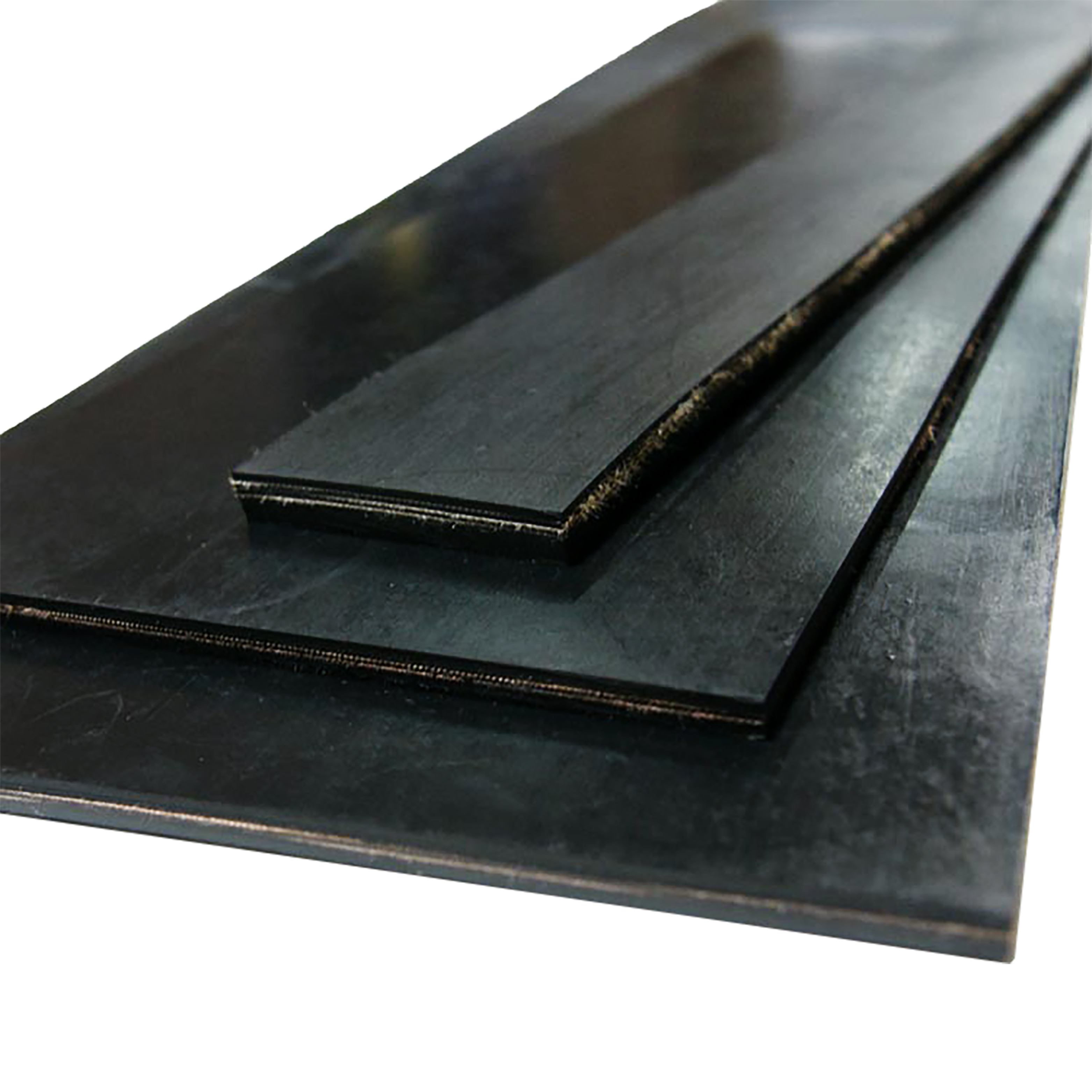
Understanding technical specifications prevents premature system failure. You must evaluate the internal architecture of the belt carefully. Engineers rely on specific metrics to match the belt to the conveyor structure. Let us break down the core components of these heavy-duty transport solutions.
Manufacturers classify these belts using ST ratings. The "ST" stands for steel tension. The number following it indicates the breaking strength in Newtons per millimeter (N/mm). For example, an ST1000 belt offers 1,000 N/mm of tensile strength. Heavy mining operations might require an ST5400 or even an ST10000 belt. Selecting the correct ST rating is critical. Undersizing leads to snapped cables. Oversizing adds unnecessary dead weight to your conveyor motors.
The internal wire ropes dictate flexibility and strength. Cables use specific winding patterns. Common configurations include 7x7 or 7x19 wire rope construction. A 7x7 core contains seven strands of seven wires. It offers excellent rigidity. A 7x19 core contains seven strands of nineteen thinner wires. This higher wire count increases flexibility. It allows the heavy belt to wrap around smaller pulleys without structural fatigue.
Pitch refers to the exact spacing between parallel cables. Wider pitch provides more rubber between cords. This improves impact absorption from falling rocks. Narrower pitch increases overall tensile strength but reduces flexibility. You must balance these two factors based on your material size.
The core provides strength, but the rubber covers protect the core. Top cover thickness depends on material lump size and drop height. Large, sharp rocks dropped from high chutes demand top covers exceeding 15 mm. Bottom covers interact with idlers and pulleys. They typically range from 5 mm to 8 mm. If covers wear down, exposed steel rusts quickly. Moisture destroys the internal bond. Therefore, specifying adequate thickness extends operational life.
Engineering precision dictates success. You must match your exact steel cord conveyor belt specifications directly to dynamic load models. Engineers calculate peak tension during start-up sequences. They factor in incline angles, material density, and acceleration curves. Aligning these technical parameters prevents premature core fatigue and expensive structural failures.
Standard ST Rating Classifications
ST Rating | Working Tension (N/mm) | Typical Cord Diameter (mm) | Maximum Cord Pitch (mm) |
|---|---|---|---|
ST 1000 | 1000 | 4.0 | 12.0 |
ST 2000 | 2000 | 6.0 | 12.0 |
ST 3150 | 3150 | 8.1 | 15.0 |
ST 5400 | 5400 | 11.3 | 16.0 |
Internal cables provide pulling power. External rubber handles environmental abuse. Industry-specific hazards destroy standard rubber compounds quickly. You must categorize your operational environment to select the correct chemical formulation for your covers.
Mining environments subject belts to constant gouging. Sharp ores slice through standard rubber. For these applications, you need highly abrasion-resistant grades.
DIN-X Grade: Offers exceptional resistance to cutting and gouging. It suits heavy, sharp rocks dropped from significant heights.
DIN-Y Grade: Provides standard abrasion resistance for smaller crushed stones and sand.
DIN-W Grade: Specifically formulated to resist extreme wear in highly abrasive, fine-particle environments.
Moving hot clinker or sintered ore destroys normal rubber. Standard covers harden, crack, and peel when exposed to high heat. Heat-resistant covers utilize EPDM or Chlorobutyl compounds. These specialized formulas withstand continuous material temperatures exceeding 150°C (300°F). They prevent the cover from separating from the steel core during thermal expansion.
Underground operations face severe fire risks. Friction can ignite standard rubber easily. Enclosed spaces turn belt fires into lethal disasters. Safety regulations mandate specific fire-retardant covers.
MSHA Compliance: Required for US mining operations. It guarantees self-extinguishing properties.
ISO 340 & EN 14973: International standards ensuring belts will not propagate flames.
FRAS (Fire Retardant Anti-Static): Prevents static electricity buildup, eliminating sparks in explosive atmospheres.
Recycling plants move materials coated in oils, greases, and solvents. Petroleum-based fluids attack standard rubber. The covers swell, soften, and eventually peel away from the core cables. NBR (Nitrile Butadiene Rubber) compounds resist these chemical attacks. They maintain structural integrity even when soaked in industrial resins and machine oils.
Procuring the right belt is only half the battle. Installation introduces significant field risks. You must prepare your existing infrastructure for this heavy-duty upgrade. Ignoring structural readiness leads to immediate mechanical failures.
Fabric belts often use simple mechanical metal fasteners for quick repairs. Steel cables cannot use mechanical fasteners. The intense tension rips fasteners right out of the rubber. You must use hot vulcanized splicing. This process is complex, expensive, and time-consuming.
Stripping: Technicians strip the rubber covers back to expose the bare cables.
Stepping: They cut the cables into precise staggered lengths (a step-splice) to interlock the two ends.
Laying: Technicians lay fresh unvulcanized rubber and special tie-gum between the interlocking cables.
Pressing: A heavy vulcanizing press applies massive heat and pressure to cure the joint.
A single splice can take up to 24 hours. You must schedule adequate downtime and hire certified technicians.
Thick metal cables resist bending. If your drive and tail pulleys are too small, the internal cables experience severe bending stress. Over time, this metal fatigue causes cables to snap. Furthermore, the stiff belt may pull out from the rubber matrix. Always audit your pulley diameters against the manufacturer specifications. Upgrading to a thicker belt usually requires installing larger drive pulleys.
Steel is incredibly heavy. Replacing a fabric belt adds massive dead weight to your conveyor system. You must audit your structural components before installation. Upgraded idlers are necessary to support the extra tons of moving mass. Drive motors may need higher horsepower to overcome the increased starting inertia. Braking systems also require recalibration to stop the heavier load safely.
Long belts represent massive capital investments. You cannot rely on manual inspections alone. Modern systems integrate embedded RFID tags or magnetic rip-detection loops. If a jammed rock pierces the belt and starts a longitudinal tear, the system detects the broken loop instantly. It shuts down the conveyor motor automatically. This prevents a minor puncture from destroying kilometers of expensive belt.
Sourcing high-tension transport belts requires strict procurement protocols. A slight manufacturing defect causes catastrophic field failures. You must audit potential partners thoroughly. Procurement teams need a reliable vetting framework.
Assess the factory floor directly. Heavy-duty belts require massive tensioning equipment during the curing process. The rubber must cure while the cables are under precise, uniform tension. Partnering with a proven conveyor belt manufacturer steel cord conveyor provider ensures structural integrity. Ask about their maximum roll lengths. You want a facility capable of producing long, continuous sections. Mid-roll factory splices introduce unnecessary weak points before the belt even ships.
Do not accept verbal quality promises. Demand documented proof. A reputable factory performs dynamic penetration testing to simulate rock impact. They execute strict cord pull-out strength tests to ensure the rubber bonds perfectly to the metal. Most importantly, demand full X-ray scanning of the finished roll. X-rays reveal hidden cord misalignments or internal air bubbles. You must reject any roll showing internal structural defects.
The joint is the weakest point of any conveyor system. Your chosen steel cord conveyor belt supplier must provide proprietary splicing materials. These splice kits contain unvulcanized rubber engineered specifically for their exact cover compound. Mixing third-party splice materials causes chemical incompatibility and joint failure. Additionally, reputable suppliers offer on-site engineering supervision during the final vulcanization process.
Review the warranty limitations closely. Understand exactly what constitutes a manufacturer defect versus operational abuse. Many warranties void immediately if uncertified technicians perform the splicing. Establish transparent timelines. These heavy rolls require specialized flatbed transport or oversized ocean freight. Factor long shipping logistics into your planned maintenance downtime.
Specifying a heavy-duty reinforced belt is a critical intersection of engineering disciplines. You must align peak tension requirements with environmental hazards and existing structural compatibility. Choosing the right internal cables prevents catastrophic snapping, while selecting the proper rubber cover extends operational life against severe abrasion, heat, or chemicals. Proper planning prevents expensive post-installation structural modifications.
Your next step is to finalize your dynamic load calculations. Bring your engineers and procurement managers together to review route complexity and pulley diameters. Once you have established precise system requirements, request comprehensive X-ray testing data and splice compatibility guarantees from your shortlisted manufacturers. By securing these technical parameters, you guarantee decades of reliable, uninterrupted material transport.
A: EP (polyester/nylon) belts use fabric plies for tension. They are cost-effective but stretch up to 3% under load. Steel cord belts use parallel metal cables. They handle extreme tension loads over long distances and limit elongation to 0.25%. Steel belts require higher initial investment but last significantly longer.
A: In heavy industrial applications, they typically last between 10 and 20 years. Lifespan depends entirely on cover rubber selection, routine maintenance, structural alignment, and the quality of the initial vulcanized splices.
A: Yes, technicians can repair localized damage. They use hot vulcanized patches to reseal exposed cables and prevent internal rusting. However, long longitudinal rips often require cutting out the damaged section and splicing in a new piece of belt.
A: Engineers calculate peak operating tension based on material weight, incline angle, conveyor length, and acceleration forces. They divide this peak tension by the belt width and apply a safety factor (often 5:1 or 6:1) to determine the required ST rating.