Views: 0 Author: Site Editor Publish Time: 2026-10-08 Origin: Site


Agricultural machinery faces immense stress every single day in the field. Combine harvesters and heavy-duty tractors endure severe shock loads, intense vibration, and relentless debris. When a critical drive component fails during tight peak harvest windows, you immediately face lost revenue. Unplanned downtime creates massive operational bottlenecks across your entire farm infrastructure. We wrote this guide to help you move past basic dimensional matching when replacing parts. You will learn how to evaluate core material composition, specific profile specifications, and complex operational trade-offs. We will explore structural features, installation protocols, and vendor compliance criteria. By understanding these technical nuances, you can ensure reliable, heavy-duty drive system performance across your fleet. Avoid catastrophic field failures by making informed, engineering-backed decisions right now. Your harvest depends heavily on reliable mechanical execution.
Assess when higher upfront costs make operational sense. Cogged belts cost more initially than standard wrapped options. However, standard wrapped belts often fail sooner under heavy strain. You must evaluate the operational trade-offs carefully before purchasing. We recommend installing an agricultural cogged V belt for high-demand drives. The long-term performance benefits usually outweigh the initial expense.
Cogged designs dissipate heat much faster than solid belts. Heat acts as the primary enemy of industrial rubber. Continuous high-load operations generate massive thermal friction constantly. Combine harvesters run relentlessly during peak harvest seasons. Their enclosed drives bake under heavy protective metal shields. The cogs act like small, efficient fan blades. They move air actively around the drive block. This active cooling reduces thermal degradation significantly. It prevents the rubber from hardening and cracking prematurely.
Furthermore, internal notches reduce bending stress on the material. The belt wraps tighter around smaller pulleys easily. This flexibility prevents premature cracking along the base rubber. It also minimizes energy loss during high-speed rotation. You experience far less dangerous slippage under heavy loads. Power transfers efficiently from the motor to the implement.
However, you face a distinct trade-off reality here. Cogged belts provide superior, highly aggressive mechanical grip. They bite hard into the metal pulley grooves. This aggressive bite can wear down older pulleys rapidly. You must perform a mandatory pulley inspection beforehand. Never install a raw edge belt on damaged sheaves. Worn sheaves will destroy the new rubber instantly.
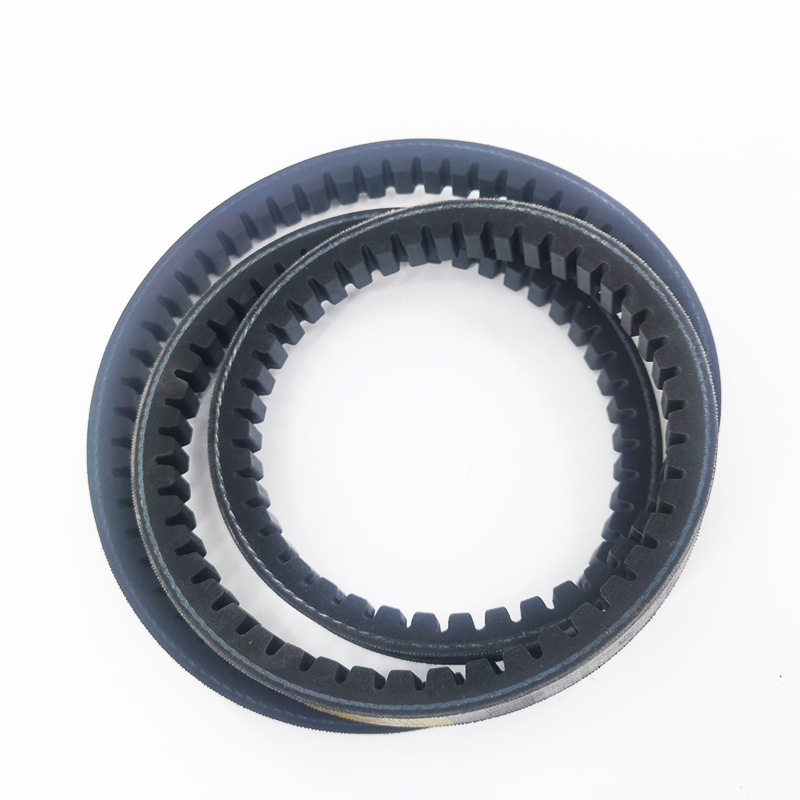
Understanding the "AV" designation remains a critical first step. The letters AV stand for Agricultural or Automotive V-belt. You must map this profile accurately to your equipment. It dictates horsepower capacity and dimensional fit directly. A mismatched profile destroys metal sheaves very quickly. Choosing the correct AV10 AV13 AV17 agricultural V-belt prevents sudden failures.
The AV10 profile works best for light-duty auxiliary drives. It features a narrow ten-millimeter top width dimension. You typically find them running standard alternator drives. Agricultural water pump drives also utilize this smaller profile. They require tight bends around small metal pulleys. These systems transmit lower power overall.
The AV13 profile serves as the broad industry standard. It measures roughly thirteen millimeters across the top edge. You see this profile on medium-to-heavy farm applications. It balances load capacity perfectly against required operational flexibility. Most secondary drive units on modern tractors use them. They offer exceptional reliability for general power transmission tasks.
The AV17 profile handles maximum heavy-duty power transmission needs. Its massive seventeen-millimeter top width grips sheaves fiercely. Engineers specify AV17 exclusively for primary PTO drives. Heavy choppers and large threshing drums rely on them. Tensile strength becomes the primary success criterion for AV17. They withstand brutal torque loads without snapping.
Always verify top-width and depth dimensions carefully before installation. Compare new dimensions directly against existing sheave geometries. Incorrect profiles will bottom out deeply in the groove. They might also ride too high on the edges. Both scenarios cause severe slippage and rapid burnout.
| Profile Type | Top Width (mm) | Typical Application | Power Transmission Level |
|---|---|---|---|
| AV10 | 10.0 | Alternators, Water Pumps | Light-Duty |
| AV13 | 13.0 | Secondary Drives, Fans | Medium-Duty |
| AV17 | 17.0 | Main PTO, Heavy Choppers | Heavy-Duty |
You must move beyond generic rubber compound specifications. Specific material sciences prevent catastrophic field failures effectively. Evaluate these internal materials before making bulk purchasing decisions. The internal components determine overall lifespan.
Tensile cord construction dictates load capacity directly. Standard polyester cords stretch easily under heavy agricultural loads. Farm equipment generates massive, sudden shock loads constantly. Imagine a forage harvester swallowing a thick field rock. Polyester stretches and slips during these violent impact events. Conversely, Aramid or Kevlar cords resist shock loads perfectly. They exhibit nearly zero elongation under severe physical stress. You maintain consistent tension during brutal harvesting conditions. The machine keeps running smoothly.
Compound resilience matters just as much as cord strength. Evaluate the base elastomer closely during vendor selection. Standard Neoprene offers basic resistance to daily wear. However, EPDM compounds provide vastly superior environmental protection. Agricultural drives face harsh, destructive contaminants every single day. Motor oil and hot hydraulic fluid leak onto them. Corrosive fertilizers blow directly into the engine bays. Extreme UV rays bake the exposed rubber surfaces constantly. EPDM resists these chemical and thermal attacks brilliantly. It refuses to crack under extreme temperature fluctuations.
Finally, consider internal debris shedding capabilities. Standard wrapped belts trap abrasive dirt against the pulley. This trapped dirt acts like rough grinding sandpaper. It eats away at the expensive metal sheaves. The raw edge geometry prevents this dangerous material buildup. Cogged gaps actively expel dust, chaff, and loose dirt. They fling debris outward away from the rotating sheave. This mechanical cleaning action extends pulley life significantly.
Upgrading your drives introduces practical field challenges immediately. High-performance components require strict, disciplined installation protocols. You cannot simply pry them onto the sheaves forcefully. Poor installation practices ruin premium materials in minutes. You must train your maintenance team properly.
Tensioning protocols demand precision and immense patience. Cogged designs require highly accurate initial tensioning settings. Under-tensioning leads directly to rapid sidewall rubber glazing. Once glazed, the rubber loses all functional friction. Over-tensioning causes entirely different, vastly more expensive problems. It places excessive lateral loads on internal equipment bearings. Premature bearing failure halts your heavy machinery completely. You will spend days repairing shattered bearings.
Follow these mandatory installation practices carefully:
You must respect the mandatory break-in period rigidly. Document your retensioning schedule carefully for every machine. You must retension after the first two operating hours. The rubber seats deeply into the metal pulley grooves. This seating creates artificial slack inside the drive system. Retensioning eliminates this slack permanently for the season.
Alignment sensitivities require strict attention from your mechanics. Cogged designs lack the physical forgiveness of wrapped belts. Angular misalignment causes the rubber to twist violently. Parallel misalignment forces the cogs against sharp sheave walls. Both errors shred the sidewalls in mere hours. Use laser alignment tools for heavy-duty drive setups. Visual alignment simply fails to provide necessary accuracy.
| Observed Symptom | Probable Cause | Corrective Action |
|---|---|---|
| Rapid sidewall wear | Severe pulley misalignment | Realign sheaves using laser tools |
| Hard, glazed sidewalls | Under-tensioning causing slip | Increase tension to OEM specs |
| Excessive vibration | Damaged internal tensile cords | Replace unit and check for debris |
| Hot equipment bearings | Severe over-tensioning | Reduce tension immediately |
Selecting a manufacturing partner requires strict shortlisting logic. Fleet-wide procurement demands reliable, consistent product quality always. Do not buy solely based on cheap initial pricing. Unreliable parts cost thousands in lost harvest time. You need a vendor who understands agricultural demands deeply.
Verify their compliance with global manufacturing standards strictly. Ask for official ISO 9001 certification documentation upfront. Demand strict adherence to specific DIN or RMA tolerances. These engineering standards guarantee batch-to-batch dimensional stability. You need every replacement to fit identically perfectly. Unregulated imports often vary wildly in actual physical width. A variance of one millimeter causes massive slippage issues.
Assess their supply chain reliability deeply before signing contracts. Peak agricultural seasons wait for no external shipping delays. A broken harvester needs replacement parts within twenty-four hours. Ensure the vendor maintains massive localized inventory hubs. Ask about their warranty claims process transparency directly. Legitimate manufacturers replace defective parts without complex legal arguments. They stand behind their engineering confidently.
Take a highly actionable next step this season. Conduct a localized pilot test on a high-failure machine. Install the new premium components on a problematic chopper. Measure tension retention accurately after fifty hours of use. Monitor internal heat generation using an infrared thermometer. Compare these specific metrics before executing a fleet-wide rollout. Data-driven decisions protect your agricultural operation from failure.
Selecting the right drive components ensures seasonal success effortlessly. You must balance specific AV profiles against applied loads. Choose appropriate internal cord materials for extreme shock resistance. Maintain strict, precise installation and sonic tensioning protocols always. Never prioritize the lowest unit price alone during procurement. Focus entirely on extending machine uptime heavily. Maximize operational reliability throughout the critical harvest window instead. A highly reliable drive system protects your revenue stream.
A: Yes, provided you match the exact profile dimensions. You must adjust tension accurately after installation. Cogged designs bite harder, so check sheave wear first. Worn sheaves destroy raw edge belts very quickly. Always verify your pulley condition before upgrading.
A: Measure the top width of the pulley groove. An AV10 measures ten millimeters across the top. AV13 measures thirteen, and AV17 measures seventeen. Consult your OEM equipment manual for required power transmission ratings. High-horsepower systems mandate larger profiles safely.
A: They experience minor initial seating stretch during run-in. The rubber seats deeper into the pulley grooves initially. However, long-term elongation depends entirely on the cord material. Aramid or Kevlar cords virtually eliminate long-term stretching. Polyester cords will stretch continuously under heavy loads.