Views: 0 Author: Site Editor Publish Time: 2026-10-01 Origin: Site


Incorrect V-belt replacement often leads to premature drive failure. It also causes excessive sheave wear and costly unplanned downtime. Many engineers face this challenge daily. European and international machinery heavily relies on narrow-profile designs. Specifically, they use narrow metric belts for optimal power transmission. Decoding the part number accurately is your critical first step in the procurement process. Getting it wrong means wasted money and delayed production lines.
In this comprehensive guide, we provide a clear, authoritative framework. You will learn how to read, measure, and source these drive belts effectively. We will cover XPZ, XPA, XPB, and XPC sizes in detail. Procurement teams and maintenance engineers can then specify replacement parts without errors. You will confidently navigate standard dimensions, length measurements, and nomenclature standards. This ensures your drive systems operate continuously at peak efficiency.
Industrial drive belts use specific codes to communicate their physical properties. Decoding these codes prevents procurement errors. It also ensures you select the correct belt for your drive system. The standard alphanumeric code breaks down into four specific components.
The "X" (Cogged/Molded Notch)
The letter "X" indicates a raw-edge, cogged construction. These belts feature a notched bottom instead of a fabric-wrapped exterior. This molded notch design significantly reduces bending stress. It allows the belt to wrap tightly around smaller sheaves without cracking.
The "P" (Profile/Metric Narrow)
The "P" denotes a narrow profile built to strict ISO metric standards. Narrow belts offer a much higher horsepower capacity in a smaller footprint. They outperform classical wrapped belts by wedging deeper into the sheave groove.
The Suffix (Z, A, B, C)
The final letter indicates the specific cross-sectional dimensions. It defines the top width and the overall thickness of the belt. These letters directly correspond to the standardized groove sizes machined into the pulleys.
The Numeric Value
The numbers following the letters represent the belt length. This value is always measured in millimeters. It represents the Datum Length (Ld) or Pitch Length (Lp).
Let us look at a practical example breakdown. If you order an XPA 1250, you are requesting a specific item. You need a cogged narrow profile "A" cross-section. It must measure exactly 1,250 mm in Datum Length. Understanding this formula makes sourcing an XPZ XPA XPB XPC cogged V-belt straightforward and error-free.
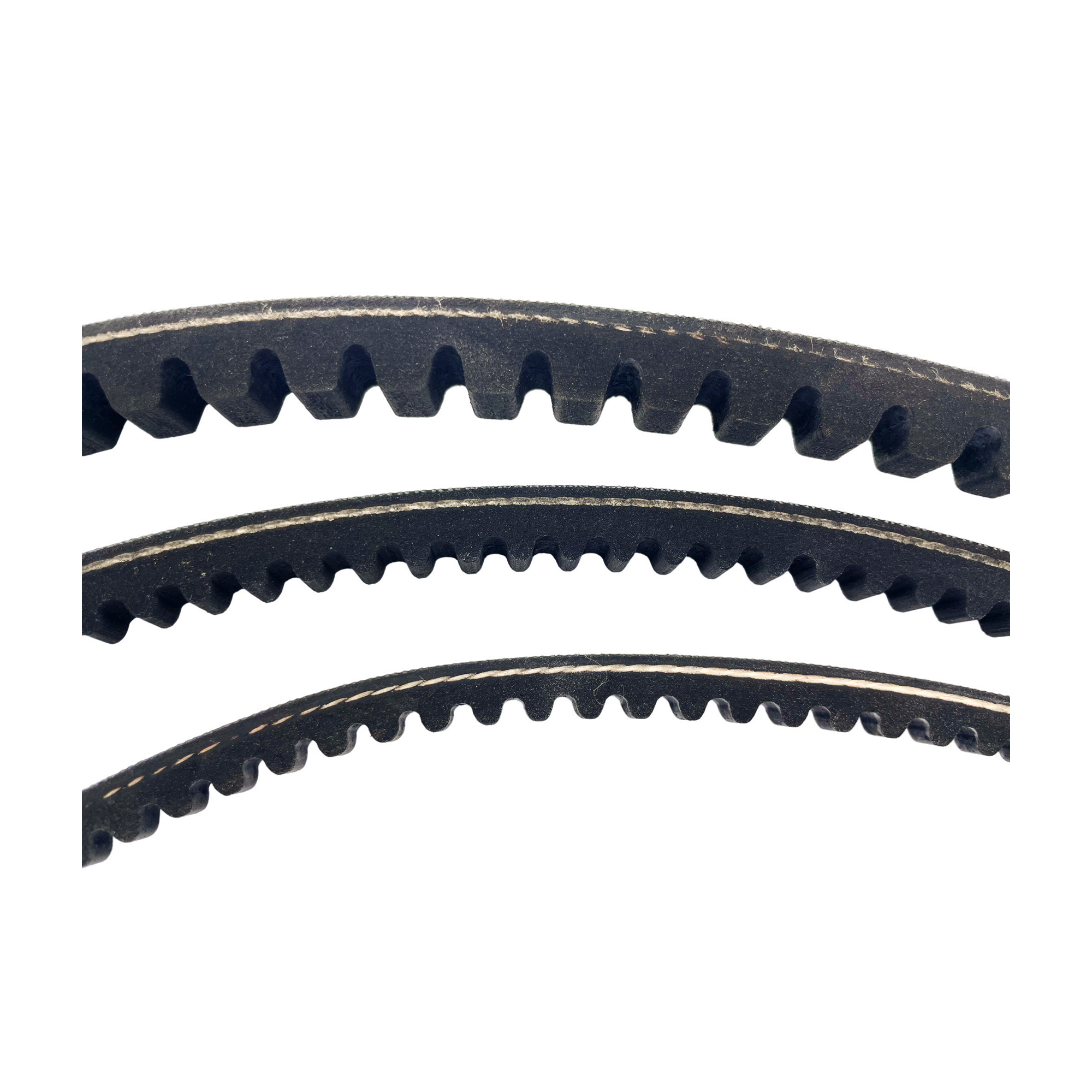
Matching physical belt dimensions to sheave grooves is non-negotiable. You must ensure a perfect fit for optimal power transmission. Using a belt sitting too high or too low alters the drive ratio. It also accelerates sidewall wear and causes slippage.
Table: Standard Metric Narrow Profile Specifications
| Profile Code | Top Width (mm) | Depth (mm) | Common Applications |
|---|---|---|---|
| XPZ | 9.7 | 8.0 | Light HVAC, small compressors |
| XPA | 12.7 | 10.0 | Medium industrial blowers, pumps |
| XPB | 16.3 | 13.0 | Heavy-duty rock crushers, mixers |
| XPC | 22.0 | 18.0 | High-torque industrial machinery |
XPZ Profile:
This belt features a 9.7 mm top width and an 8 mm depth. Engineers often use them in light-to-medium HVAC systems. They provide excellent stability for compact industrial drives.
XPA Profile:
The XPA measures 12.7 mm across the top and 10 mm deep. It handles higher horsepower than the XPZ. You will find them on medium-duty centrifugal pumps and industrial fans.
XPB Profile:
Measuring 16.3 mm wide by 13 mm deep, the XPB is a heavy-duty standard. It excels in high-torque applications. Industrial mixers and heavy conveyors rely on these robust metric cogged V belt sizes.
XPC Profile:
The largest standard profile measures 22.0 mm wide and 18 mm deep. Manufacturers reserve the XPC for the most robust industrial power transmission drives. They effortlessly manage extreme shock loads.
Never eyeball a stretched or worn belt. Implementation reality dictates a strict measurement protocol. Always use a specialized sheave gauge to confirm the groove profile. Do this especially if the original belt markings are completely worn off.
Ordering based on the wrong length measurement causes massive headaches. It remains the number one cause of returns. It also creates unacceptable replacement delays during critical production runs. You must understand how manufacturers measure these components.
Ld (Datum Length) / Lp (Pitch Length)
This serves as the primary measurement for metric narrow belts. It measures the length exactly at the pitch line. The pitch line is where the belt’s internal tension cords sit. This neutral axis does not change length when the belt bends.
La (Outside Length)
This represents the absolute outer circumference of the belt. Technicians rarely use it for ordering XP-series belts. However, catalogs sometimes provide it as a quick reference metric. Do not use this number as your primary ordering criteria.
Li (Inside Length)
This defines the inner circumference. It was common for ordering older classical belts like A, B, or C sections. It is largely obsolete for ordering modern narrow metric belts. Relying on Li for an XP-series belt guarantees a fitment error.
When sourcing these components, follow a strict decision matrix. Always order by the Datum Length (Ld) in millimeters. Only deviate from this if the specific manufacturer notes otherwise. Maintaining this standard simplifies your inventory and replacement procedures.
Engineers frequently evaluate whether to upgrade their drive systems. They consider replacing a failed SPZ, SPA, SPB, or SPC wrapped belt. Switching to an XP-series cogged equivalent offers several distinct advantages. It solves numerous operational challenges in demanding environments.
Thermal Management:
The notched cogs allow superior air flow beneath the belt. This constant circulation provides active heat dissipation. It makes them ideal for high-speed or fully enclosed drives. They also perform exceptionally well in high-ambient-temperature facilities.
Flexibility & Pulley Diameter:
Molded notches drastically reduce bending resistance. XP belts can operate on much smaller pulleys. They accommodate diameters up to 30% smaller than those required for standard SP belts. This allows for highly compact drive designs.
Energy Efficiency:
Less bending resistance translates directly to operational savings. You typically see a 2–3% gain in energy efficiency over traditional wrapped belts. The motor works less hard to bend the thick rubber around the sheaves. This efficiency lowers electrical consumption over the drive's lifespan.
However, we must recognize their transparent limitations. Cogged belts do not cure poor drive misalignment. They operate slightly louder due to the air moving through the notches. Furthermore, their raw-edge construction is highly abrasive. They may wear out softer, low-quality aluminum sheaves faster than fabric-wrapped belts.
Proper procurement goes beyond reading a part number. You must manage implementation risks carefully. A flawed installation process ruins even the best belts. Following strict protocols ensures the replacement process yields a highly stable, reliable drive system.
If replacing multiple belts on a single drive, they must be matched. We call these "match sets." Belts must be identical in length to ensure even load distribution. Manufacturers often mark them with a specific tolerance code. Never mix old and new belts on a multiple-groove sheave.
Cogged belts require highly precise tensioning upon initial installation. You must use a sonic tension meter or a spring scale gauge. Furthermore, they demand a mandatory re-tensioning. You must stop the drive and adjust the tension after a 24-to-48-hour run-in period. The cords stretch slightly during this initial phase.
Follow these structured next-step actions for a successful upgrade:
Accurately reading metric cogged V-belt sizes ensures long-term drive reliability. It completely prevents costly ordering mistakes and extended downtime. Always rely on the standardized alphanumeric naming convention. It provides all the data you need for accurate replacement.
Remember the core formula: X (Cogged) + P (Narrow) + Profile Width (Z, A, B, C) + Length (Ld in mm). Keep this framework accessible for your entire maintenance team. It simplifies communication with your industrial suppliers.
Before finalizing your purchase order, physically inspect the machinery. Verify that excessive sheave wear has not compromised the drive. Placing a brand-new XP-series belt in a worn sheave guarantees immediate performance degradation. Take the time to measure properly, upgrade to cogged efficiency where applicable, and maintain strict tensioning protocols.
A: Yes. XPZ, XPA, XPB, and XPC belts drop directly into standard SPZ, SPA, SPB, and SPC pulleys. Manufacturers design the raw-edge cogged profiles to perfectly match the groove angles of their wrapped counterparts.
A: Measure the top width and thickness using digital calipers. This determines if it is a Z, A, B, or C profile. Next, use a flexible tailor’s tape to measure the outside circumference. Finally, subtract the specific profile's standard delta value to find the Datum Length (Ld).
A: No. FHP belts, like 3L or 4L variants, feature different sidewall angles. They also have different internal cord placements and overall dimensions. They are absolutely not interchangeable with XP-series narrow metric belts.
A: Raw-edge cogged belts lack standard fabric wrapping. This makes them grip the sheave aggressively. Squealing usually indicates severe under-tensioning, excessive sheave wear, or drive misalignment. It rarely points to an incorrect belt size issue.