Views: 0 Author: Site Editor Publish Time: 2026-09-23 Origin: Site


Industrial drive systems face immense mechanical stress during continuous operation. Premature equipment failure often stems directly from thermal degradation rather than simple wear. Choosing the correct belt construction remains critical for maintaining your operational uptime. Excess heat rapidly hardens rubber compounds and degrades core tension cords. This hidden damage compromises power transmission efficiency over time. It also forces maintenance teams into frequent, unplanned equipment shutdowns. Understanding thermal dynamics helps you avoid these catastrophic failures entirely. We will examine the structural differences and operational limitations of standard and notched designs. You will discover how specific environmental factors heavily influence your final selection. Finally, we provide a clear decision framework for high-temperature applications. You will learn exactly how to match your continuous duty cycles to the optimal drive component.
Excess heat ruins rubber compounds quickly. High operating temperatures fundamentally alter the chemical structure of standard elastomers. This process strips the material of its natural elasticity. You will often notice a hard, glazed appearance on the belt sidewalls. This glazing severely reduces friction against the metal pulley.
Once flexibility drops, several mechanical problems emerge. The hardened material develops deep micro-cracks along its base. These cracks eventually reach the load-carrying tensile cords. When these internal cords lose structural support, the belt snaps under load. This sudden failure causes immediate, unplanned system downtime.
Thermal degradation creates a dangerous feedback loop. As rubber hardens, it loses its grip on the sheave. They begin to slip slightly during heavy loads. This slippage generates massive amounts of friction. Friction creates even more localized heat. This accelerating cycle guarantees catastrophic failure if left unchecked.
Production facilities suffer greatly from these thermal issues. You lose valuable production time during unplanned belt replacements. Maintenance labor requirements increase dramatically. Furthermore, slipping belts transmit less horsepower from the motor to the driven equipment. This efficiency drop wastes energy and reduces overall machine output.
You must establish strict success criteria for your drive systems. A successful installation requires selecting components engineered for specific ambient temperatures. The optimal choice maintains flexibility without demanding frequent re-tensioning. It must hold a consistent grip across its entire service life. Matching the construction style to your thermal environment prevents premature degradation.
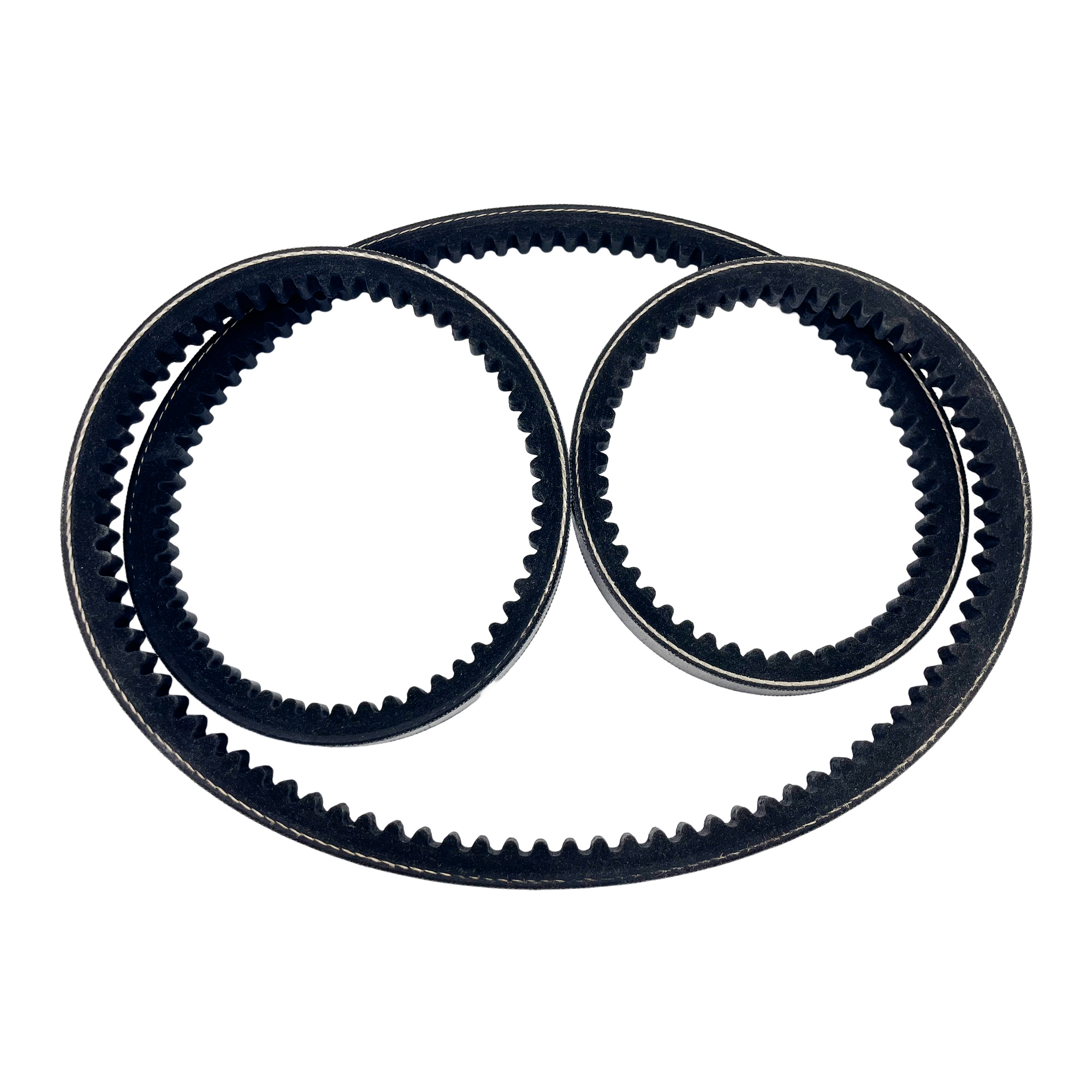
Understanding the fundamental engineering differences is crucial when evaluating the cogged vs wrapped V belt debate for your facility. Their distinct structural profiles determine exactly how they manage internal and external heat.
A traditional wrapped V-belt relies on a fully enclosed design. Manufacturers build a solid rubber core embedded with tensile cords. They wrap this entire core in a protective, rubber-impregnated fabric jacket. This outer layer serves multiple protective functions. It shields the internal elastomers from dust, dirt, and minor fluid splashes.
However, this fabric cover creates a severe thermal reality. The heavy jacket acts as an effective thermal insulator. Drive components generate significant internal heat through continuous bending. The solid core produces friction as it forces its way around tight sheaves. The fabric cover traps this internal friction heat inside the core. The trapped heat accelerates the hardening process discussed earlier.
Engineers developed the notched design specifically to solve this heat retention problem. A premium cogged V-belt features exposed rubber sidewalls, commonly called a raw edge. Manufacturers mold deep cogs or notches into the underside of the profile. These cogs do not engage with gears. They exist entirely to improve mechanical flexibility.
The thermal reality of this design changes everything. The cogs act as stress-relief zones. They allow the material to bend around pulleys with significantly less resistance. Less bending resistance means less internal friction heat. Additionally, the open notches act exactly like cooling fins on an engine. They scoop up ambient air and channel it over the hot exposed rubber. This active airflow actively dissipates operational heat away from the drive.
We must evaluate these designs across several critical performance metrics. Mechanical efficiency and heat dissipation directly dictate the longevity of your drive system.
Notched designs actively manipulate the air surrounding the sheave. As they spin at high speeds, the physical gaps disrupt stagnant air pockets. This turbulence flushes hot air out of the sheave groove. Industry tests show these designs can lower operating temperatures by up to 30%. This temperature drop dramatically extends the usable life of the elastomers. Cooler operation prevents the rubber from glazing and cracking prematurely.
Every time a solid rubber profile bends around a pulley, it consumes energy. Engineers call this energy loss hysteresis. The flexibility of a notched profile significantly reduces this bending resistance. The motor requires less amperage to spin the drive. Facilities upgrading large air handling units often see massive benefits here. You can typically expect a 2% to 3% energy savings strictly from reduced bending resistance. Over an entire plant, this efficiency gain reduces significant electrical demand.
Compact equipment designs force belts to navigate incredibly small pulleys. Solid, fabric-covered profiles struggle immensely on small sheaves. The tight radius creates severe flex-fatigue. The outer cover stretches painfully while the inner core compresses heavily. This generates immediate, destructive heat. Notched designs excel here. The bottom gaps close up cleanly as they wrap around small diameters. They bend easily without generating destructive internal compression heat. You must specify notched designs whenever your drive uses sub-standard sheave diameters.
Table: Performance Matrix of Belt Constructions
| Performance Metric | Wrapped Construction | Cogged Construction |
|---|---|---|
| Flexibility | Low to Moderate | Exceptionally High |
| Heat Dissipation | Poor (Insulated) | Excellent (Cooling Fins) |
| Energy Efficiency | Standard Baseline | 2-3% Higher Efficiency |
| Small Pulley Suitability | Prone to Flex Fatigue | Highly Recommended |
| Operating Temp Limit | Typically up to 140°F | Often up to 250°F (EPDM) |
While notched designs dominate thermal metrics, they are not universally perfect. Environmental factors dictate when traditional fabric covers remain the superior engineering choice.
You must evaluate your ambient air quality. High-dust environments pose major challenges for raw edge designs. Aggregate plants, mining sites, and agricultural facilities are filled with abrasive airborne particles. Raw edge rubber grips sheaves aggressively. When abrasive dust mixes with this aggressive grip, it acts like sandpaper. It rapidly wears down the metal sheave walls. A fabric-covered design tolerates this abrasive dust much better. The fabric allows for micro-slippage. This protects the expensive metal sheaves from rapid abrasive destruction.
Certain machines require intentional slippage during startup. Lawn mowers and agricultural conveyors often use clutching drives. An idler pulley engages and disengages the drive dynamically. Fabric-covered designs are mandatory here. The jacket allows the profile to slip smoothly against the pulley until tension is fully applied. It engages gently without grabbing. If you use a raw edge design here, it will grab aggressively. It will shudder, squeal, and likely shred itself during engagement.
Industrial environments often expose drives to oil leaks and chemical overspray. Both construction styles can use special synthetic rubber compounds for chemical resistance. However, their structural defense differs. A fabric jacket acts as a first line of defense. It slows down chemical penetration into the load-carrying cords. A raw edge design leaves its internal elastomers exposed directly to ambient fluids. While EPDM rubber resists many chemicals, heavy oil exposure can still cause raw edges to swell faster than fully jacketed alternatives.
Strategic procurement requires looking beyond basic fit and function. You must evaluate the projected lifespan and the risks of retrofitting older equipment.
Industrial buyers must prioritize operational longevity. Standard fabric-covered profiles serve well for basic, light-duty applications. However, in continuous, high-heat environments, their lifespan drops aggressively. Upgrading to advanced notched profiles changes this trajectory. These advanced designs often outlast traditional profiles by a factor of two in demanding environments. This extended lifespan slashes your maintenance intervals. Maintenance teams spend less time re-tensioning and replacing broken parts. You gain hundreds of hours of uninterrupted production time annually.
You can seamlessly swap these two types on standard industrial sheaves. They share identical cross-section dimensions (such as standard A, B, C, or narrow 3V, 5V profiles). However, retrofitting carries hidden mechanical risks. Raw edge designs require precise sheave alignment. Misaligned pulleys force the aggressive raw edge against the sheave wall unevenly. This rapidly destroys both the belt and the metal pulley. Before retrofitting, you must inspect the sheaves using a specialized groove gauge. Worn sheave walls will instantly chew through a new raw edge installation. Always replace severely worn metal components before upgrading your drive components.
Choosing the correct drive component directly impacts your facility's reliability. For applications where heat generation drives premature failure, notched raw-edge designs stand as the unequivocal engineering choice. They actively dissipate thermal loads and significantly reduce internal bending friction. Conversely, traditional fabric-covered designs remain vital for abrasive environments and clutching mechanisms.
You should audit your current high-temperature drives immediately. Look for signs of glazed sidewalls and frequent re-tensioning schedules. These symptoms indicate an urgent need for an upgraded, thermally stable profile. Contact your internal engineering team to perform a comprehensive drive system evaluation. Aligning your hardware choices with your actual thermal realities guarantees smoother, more reliable production cycles.
A: Yes. They share identical standard cross-sections, such as A, B, C, or narrow 3V and 5V profiles. They will seat correctly in your existing standard sheaves. However, ensure your metal sheaves are not severely worn before installing a raw edge design.
A: Wrapped belts typically run smoother and quieter during engagement. Their fabric cover allows for gentle seating. Cogged versions provide a much more aggressive grip. This raw edge friction can produce a slight whirring noise during high-speed operations.
A: No. Both types utilize high-tensile cords, like polyester or aramid, for tension carrying. The cord material dictates the stretch profile, not the outer rubber construction. However, notched designs maintain their compound integrity much longer under extreme heat.