Views: 0 Author: Site Editor Publish Time: 2026-10-16 Origin: Site


Industrial drives handle massive power transfer daily in mining, agriculture, and heavy manufacturing. However, this extreme workload often creates severe vibration that destroys equipment from the inside out. Heavy drive vibration brings hidden costs like premature bearing failure, severe shaft fatigue, and unscheduled downtime in high-impact applications. Standard single V-belts often fail here. Smooth banded belts struggle just as much. They both suffer from violent belt whip and turnover under intense shock loads.
You need a smarter solution to keep critical operations running smoothly. A banded cogged V belt serves as an engineered mechanical intervention. It combines ultimate lateral rigidity and extreme flexibility. This unique design stabilizes heavy drives instantly without demanding complete system redesigns. In this guide, you will learn how these advanced belts solve dangerous vibration problems. We will explore their unique physical design, compare them against standard alternatives, and outline exact evaluation criteria for your next drive upgrade.
Heavy drives rarely operate under perfectly smooth conditions. They face extreme environmental and mechanical realities daily. Shock loads hit the drive system incredibly hard. Pulsating power sources create constant, uneven stress across the sheaves. Think of heavy rock crushers or industrial wood chippers. They do not experience steady, predictable loads. Instead, they face violent, sudden resistance. Heavy-duty reciprocating air compressors behave similarly. They pulse constantly during normal operation. These intense forces alter center distances momentarily between pulleys. This sudden variation causes instant belt slip and massive tension fluctuations.
Mechanical failure rarely happens instantly. It follows a predictable path of symptom escalation. We can trace this failure path clearly. It begins with minor, often ignored belt slip. As shock loads continue, this slip transforms into harmonic belt whip. The belt vibrates violently across the drive span. It bounces up and down like a plucked guitar string. Eventually, individual belts flip entirely upside down inside the sheave groove. We call this catastrophic turnover. In severe cases, the violent whipping motion ejects the belt completely off the drive. This poses severe safety risks to facility personnel.
These violent mechanical failures cost businesses dearly. We measure this impact through direct financial and mechanical metrics. You face frequent replacement frequency for destroyed belts. Lost production hours drain facility revenue rapidly during unplanned maintenance. Furthermore, secondary components suffer massive damage. Constant vibration destroys expensive motor bearings prematurely. It ruins sensitive mechanical seals. It can even snap solid metal motor mounts. By ignoring drive vibration, you guarantee a cycle of costly, recurring equipment repairs.
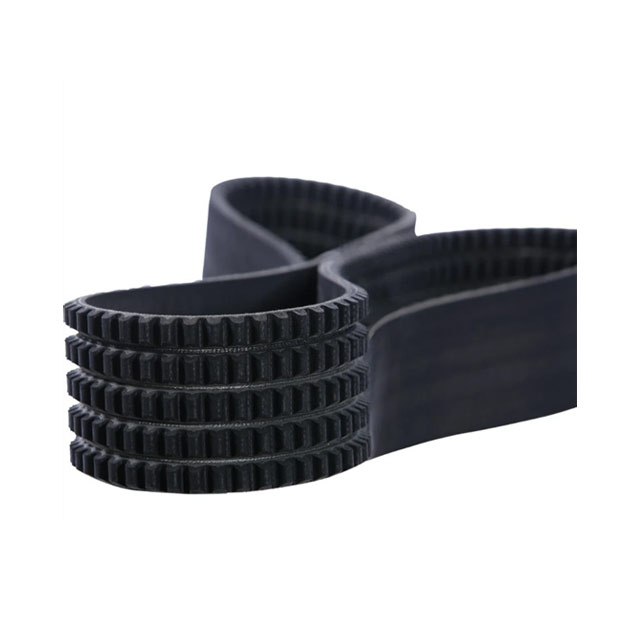
Standard single belts vibrate independently across long center distances. They enter sheave grooves at unequal depths during shock loads. A unified tie-band prevents this chaotic behavior completely. Manufacturers cure a high-strength, reinforced backing across multiple belt strands. This physically ties them together. The tie-band prevents individual belts from vibrating independently. They must act as one solid unit. They share the sudden shock load equally across all grooves. Furthermore, the banded structure prevents twisting under peak torque. The belts cannot physically flip over because the stiff backing holds them perfectly upright.
Solid rubber belts resist bending around pulleys. This natural resistance creates friction and internal heat. We call this energy-sapping process hysteresis. Molded notches, or cogs, solve this problem brilliantly. They remove exact portions of rubber where compression occurs. The belt flexes easily around much smaller pulleys. This directly lowers thermal buildup inside the core. It minimizes hysteresis dramatically. The system runs much cooler overall. Cooler rubber degrades much slower. Therefore, the notched underside maintains higher transmission efficiency while extending operational lifespan.
Heavy drives demand both of these mechanical traits simultaneously. You need robust lateral rigidity to survive brutal shock loads. You also need high flexibility to prevent destructive heat buildup. Combining these two features creates an ideal industrial solution. It handles severe environments flawlessly. The band stops the whipping and turnover. The cogs stop the heat and energy loss. Together, they form an engineered component that stabilizes the most difficult pulsating drives in your facility.
Standard single belts stretch unpredictably under high loads. Tension becomes dangerously unequal across the drive system. Some belts pull all the weight while others simply slip and burn. Banded variations unify this load distribution perfectly. Every individual strand pulls exactly the same load. The unified backing forces equal tension distribution. They eliminate the classic problem of mismatched belts stretching at different rates.
Smooth banded belts provide stability but often suffer from cracking. Heavy-duty cycles generate immense operational heat. Trapped heat destroys standard rubber compounds quickly. The base of a smooth belt compresses heavily on small pulleys, generating extreme temperatures. Cogged variants dissipate this heat efficiently. The notches allow airflow around the belt core. They run significantly cooler and last much longer in identical operating conditions. They prevent the dreaded bottom-cracking that ruins smooth banded belts.
For maximum drive efficiency, facility managers choose a banded cogged narrow V-belt. This refers specifically to advanced 3VX or 5VX profiles. They offer an incredible narrow profile advantage over classical A, B, or C sections. The deeper wedge shape grips the sheave walls tighter. You achieve higher horsepower capacity instantly. You fit this massive power into a heavily reduced drive envelope. This upgrade maximizes your overall power density perfectly without increasing the physical width of your pulleys.
Table 1: Performance Matrix for V-Belt Drive Solutions
| Belt Type | Vibration Control | Heat Dissipation | Power Density | Best Application |
|---|---|---|---|---|
| Standard Single V-Belt | Low | Moderate | Standard | Light loads, smooth operation |
| Smooth Banded V-Belt | High | Low (Prone to cracking) | High | Long center distances, large pulleys |
| Banded Cogged V-Belt | High | Excellent | Very High | Shock loads, small pulleys, extreme heat |
Is this specific upgrade right for you? You must conduct a thorough drive assessment first. Look for specific historical failures in your maintenance logs. We recommend reviewing these core criteria:
You must evaluate sheave compatibility carefully. Existing sheaves must meet strict RMA/ISO engineering standards. Check the groove spacing carefully. Standard deep-groove sheaves generally accept banded belts without modification. The spacing between grooves must exactly match the belt's tie-band pitch. However, severely worn sheaves act like grinding wheels. They will destroy a new tie-band rapidly. Never install new banded belts on worn, dished metal grooves.
Next, assess your daily operating environment. Oil degrades standard rubber quickly, causing irreversible slip. Extreme ambient heat destroys internal tensile cords. Static electricity poses massive explosion risks in dusty environments like grain elevators. Ensure your selected belt meets these harsh environmental realities. If your drive runs in extreme conditions, you should specify an oil-resistant and static-conductive banded cogged V belt to prevent premature failure.
Finally, analyze the financial realities of the upgrade. Banded cogged belts carry a higher upfront unit cost than standard single belts. However, this initial premium pays off rapidly. They drastically reduce maintenance labor hours. They eliminate unexpected, unscheduled downtime. They save costly secondary components from destructive vibration. The mechanical savings easily offset the slightly higher initial purchase prices.
Implementation methodology matters deeply. Even the finest engineered belt fails if installed poorly. Never pry or roll belts onto sheaves using screwdrivers or metal bars. This common mistake ruins internal fiberglass or Kevlar tensile cords instantly. You cannot see this internal damage, but the belt will snap shortly after startup. Always loosen the motor base completely. Slide the new unit into place gently by hand.
Tensioning requires strict, measurable protocol. Stop using the unscientific "thumb depression" method. It fails every time on heavy industrial drives. Use a sonic tension meter instead. A mechanical deflection gauge also works well if used properly. Banded belts demand precise, uniform tension across the entire span. They will not perform correctly without proper pre-loading. Under-tensioning causes immediate slip and heat. Over-tensioning destroys motor bearings rapidly.
Alignment tolerance is significantly tighter here. Single belts forgive slight sheave misalignment because they run independently. Banded belts do not forgive misalignment. Misalignment causes uneven tie-band wear. The band rubs against the sheave flanges, tearing the backing apart. It leads to rapid, premature failure. We highly recommend checking alignment using a precision laser alignment tool rather than a simple straightedge.
Finally, respect the mechanical run-in period. Rubber belts stretch during their first 24 hours of operation. They seat deeply into the metal sheave grooves. You must retension them after this initial period. Skipping this critical step guarantees early slip, returning vibration, and premature wear. Make retensioning a mandatory part of your work order process.
Upgrading your heavy drives is a targeted engineering decision. A banded cogged V belt cures persistent vibration, excessive heat, and dangerous turnover issues in high-impact applications. By combining a unified tie-band with precision-molded cogs, this solution delivers stability and flexibility where standard belts simply fail. You gain superior power transmission, cooler operating temperatures, and vastly improved equipment reliability.
Your next step is proactive. Conduct a comprehensive drive audit before ordering replacements. Inspect your current sheave wear meticulously. Measure actual center distances accurately. Calculate your required horsepower ratings carefully. By gathering this data, you ensure your next drive upgrade delivers maximum performance and eliminates costly, unscheduled downtime for good.
A: Standard deep-groove sheaves are usually compatible, provided the spacing between grooves matches the belt's tie-band pitch. Standard sheaves must not be excessively worn. If grooves are dished or warped, the new belt will fail rapidly. Always check sheaves with a profile gauge before installation.
A: Yes, narrow profiles (like 5VX) offer a higher power-to-width ratio, allowing heavy drives to transmit more horsepower in a more compact space compared to classical profiles (like B or C sections). The deeper wedge shape provides superior wedging action and grip.
A: Early vibration typically indicates either improper initial tensioning, severe sheave misalignment, or mounting on worn sheaves that prevent the belt from seating uniformly. It may also mean you skipped the mandatory 24-hour retensioning phase, allowing the belt to stretch and slip.
A: By reducing the bending force required to wrap around the pulley, cogs minimize internal friction (heat) and energy loss, transferring more of the motor's power directly to the driven equipment. This reduced hysteresis extends belt life and lowers operating temperatures significantly.