Views: 0 Author: Site Editor Publish Time: 2026-09-06 Origin: Site


Selecting the wrong belt thickness triggers more than just premature wear on your equipment. It directly leads to tracking failures, extreme motor strain, and costly production line downtime. Engineers and procurement teams often default to standard sizes during purchasing. They frequently bypass essential calculations for specific loads, pulley diameters, and unique product transfer needs. This common oversight results in belts failing long before their expected lifespan. You need precise sizing parameters to optimize overall system performance. A slight miscalculation in thickness can drastically alter how your machinery operates. This guide breaks down the technical sizing requirements for a pu conveyor belt. We will help you finalize your project specifications correctly. You will learn how to avoid costly over-engineering and prevent unexpected under-performance on your factory floor.
Conveyor belt sizing begins with mechanical compatibility. Thickness directly influences how a belt moves through your machinery. You must align the belt's physical profile with the structural limits of your conveyor frame.
Belt thickness and flexibility share an inverse relationship. A thicker belt naturally resists bending. If you force a thick belt around an undersized pulley, you create severe mechanical stress. The outer polyurethane cover stretches excessively. Simultaneously, the inner tension fabric compresses. This constant tension and compression cycle creates high shear forces inside the belt.
Over thousands of rotations, this stress causes ply separation. You will also experience accelerated splice failure. The thermal joint will crack and eventually break apart. You must always match the belt thickness to the minimum pulley diameter specified by your equipment design. For example, a 3mm belt cannot run smoothly on a tiny 20mm nosebar.
Finding the correct thickness requires a careful engineering balance. You need enough structural support to carry your product weight safely. However, you also need sufficient flexibility to minimize drive motor torque.
A belt overly rigid for its application forces the motor to work much harder. This increases energy consumption and generates excess heat in the drive components. Conversely, a belt too thin for heavy loads stretches prematurely. It cannot provide the necessary dimensional stability. You will constantly adjust the take-up mechanism to correct belt sag.
Common signs of flex fatigue include:
Standard polyurethane works perfectly for most sanitary and light-to-medium manufacturing tasks. However, it operates within strict boundaries. For extreme high-tension applications, polyurethane reaches its physical limits. Abrasive bulk material handling also degrades thin polyurethane covers quickly.
In these aggressive environments, you should transition to a heavy-duty ep conveyor belt. The polyester and nylon core offers superior tensile strength. These robust belts withstand massive shock loads and highly abrasive conditions without stretching.
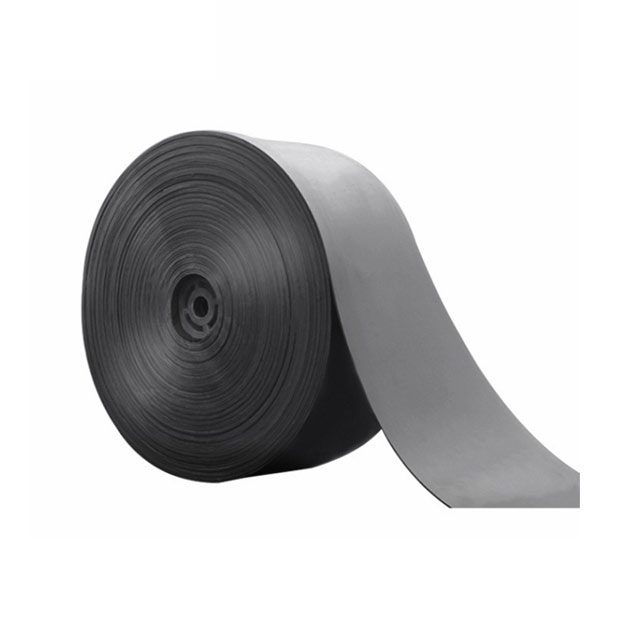
Different industries require specific thickness categories to operate efficiently. Manufacturers formulate distinct combinations of fabric plies and polyurethane top covers. We categorize these into three primary functional tiers.
These belts represent the most flexible synthetic options available. They rely on a single-ply fabric construction combined with a minimal polyurethane coating.
Most general manufacturing and food processing facilities rely on this versatile thickness range. They usually feature a robust two-ply fabric core.
Heavy industrial applications demand uncompromised structural integrity. These belts feature highly rigid, multi-ply constructions.
You should never guess your required tier. Always cross-reference your application needs with official pu conveyor belt specifications. Verify the Shore hardness value to understand surface toughness. A Shore A 85 rating provides high grip, while a Shore A 92 rating resists cutting and abrasion. Check the fabric ply count carefully to ensure optimal tension ratings.
| Thickness Tier | Size Range | Primary Application | Key Performance Benefit |
|---|---|---|---|
| Ultra-Thin | 0.8mm - 1.2mm | Bakery, knife-edge transfers | Seamless small product transition over tight radii |
| Medium Duty | 1.5mm - 2.0mm | Packaging, general food processing | Balanced flexibility, tension, and durability |
| Heavy Duty | 2.5mm - 4.0mm+ | Cutting stations, impact loading zones | Extreme puncture and stretch resistance |
Determining proper dimensions involves much more than taking basic flat measurements. You must account for dynamic operational factors, manufacturing tolerances, and surface attachments.
Specifying width demands precise calculation of lateral operational clearances. You must leave adequate room for side guards to prevent friction. If the belt rubs against a metal frame, the edges will fray rapidly. This introduces contamination risks.
Tracking guides, commonly known as V-guides, also require proper alignment spacing. Manufacturers face standard material shrinkage during production. Always discuss manufacturing tolerances before finalizing your order. A typical width tolerance might be plus or minus 2mm. Ensure this minor variance will not snag on your machinery.
Measuring total length requires a deep understanding of your take-up tension mechanism. Do not measure a stretched, worn-out belt as your baseline. An old belt has likely permanently deformed.
Over-sizing your requested length leads to insufficient tension. The belt will slip endlessly on the drive pulley. Conversely, under-sizing causes immediate mechanical strain. It damages the bearings and forces the thermal splice apart. Set your take-up mechanism to its absolute minimum position. Route a steel measuring tape exactly where the belt travels. This establishes your correct starting perimeter.
Your overall thickness changes drastically when you add surface features. You must recalculate clearances if your project requires specialized accessories.
Factor these profile additions into your height clearance calculations. They impact how the belt passes under rollers, metal detectors, and scraper blades.
Food industry applications carry strict safety and sanitary requirements. Your sizing and thickness decisions must align seamlessly with hygiene standards.
You must verify that your chosen thickness and size do not compromise overall facility hygiene. The base material must meet FDA 21 CFR, European EC 1935/2004, or USDA standards. Thicker belts sometimes utilize different plasticizer formulas. Ensure your specific configuration holds the correct certifications for direct food contact. Request documented proof of compliance from your vendor.
Thicker, multi-ply belts introduce unique sanitation challenges. The exposed fabric edges absorb moisture easily during production. This fluid ingress promotes dangerous microbial growth inside the belt. It also causes the plies to delaminate rapidly.
For meat and dairy processing, you often require encapsulated edges. This process seals the internal tension fabrics completely in solid polyurethane. Adding encapsulated edges affects your final width specification. You must account for an extra millimeter of sealing material on both sides during your design phase.
Larger, heavier belts fundamentally change your daily cleaning protocols. They possess more physical mass. Therefore, they require much more robust Clean-in-Place (CIP) systems. Thicker profiles hold ambient heat and moisture longer after hot water washdowns.
Consequently, they demand extended drying times between production shifts. If you run continuous operations, prolonged drying slows down overall output. Polyurethane is naturally resistant to fats and oils. However, prolonged exposure to boiling water can cause hydrolysis. Plan your sanitation schedules around the specific physical constraints of your chosen belt thickness.
Sourcing the right material requires partnering with competent technical experts. Not all manufacturers provide the necessary engineering support to ensure operational success.
A reliable pu conveyor belt supplier acts as a proactive engineering partner. They will actively request and review your CAD drawings. They verify your technical requirements, including pulley sizes, load weights, and running speeds.
They execute mathematical tension calculations long before quoting a final thickness. Avoid vendors who simply sell off-the-shelf sizes without asking about your application context. A competent supplier checks the "k1% value"—the exact force required to stretch the belt by one percent.
You must critically assess the supplier’s fabrication and joining methods. You typically choose between thermal finger splices and mechanical metal fasteners. The integrity of a thin PU belt relies heavily on a high-quality thermal finger splice.
A poor splice introduces a rigid, inflexible zone. This stiff area clicks and bumps as it passes over drive pulleys. It causes tracking issues and product vibration. Ask your supplier about their specific thermal splicing tolerances. Do they perform internal tensile testing on their splices?
Frame your evaluation around overall supply chain reliability. Custom widths, added cleats, and specialized lengths require custom manufacturing runs. Discuss their availability for rapid prototyping if you are designing a new conveyor system.
Demand complete transparency regarding material testing certifications. A strong supplier delivers accurate Technical Data Sheets (TDS) alongside their physical products. They clearly communicate standard lead times and stock availability for emergency replacement scenarios.
Sizing a PU belt represents a critical engineering calculation. It requires balancing product load, minimum pulley limits, and environmental hygiene factors. You cannot treat this process as a generic catalog pick. Precision here prevents catastrophic system failures and costly line downtime. Your machinery relies on accurate dimensions to run smoothly.
To move forward effectively, document your system limits today. Execute these actionable steps:
A: Typically ranges from 30mm to 50mm, but varies based on the fabric ply structure and bottom cover friction. Always check the manufacturer's technical data sheet for precise limits.
A: No. Base thickness is measured strictly from the bottom fabric to the flat top cover. Profiles, cleats, and sidewalls are specified as additional dimensional values.
A: Loosen the take-up mechanism to its absolute minimum position. Measure the exact route with a flexible steel tape. Rely on your supplier to calculate the precise cut-and-splice length.
A: Not necessarily. If a thick belt is used on an undersized pulley, the severe mechanical stress will cause it to fail much faster than a thinner, appropriately specified belt.