Views: 0 Author: Site Editor Publish Time: 2026-09-30 Origin: Site


Miscalculating Minimum Order Quantities (MOQ) or accepting unrealistic lead times for industrial rubber components often causes severe production bottlenecks. Buyers frequently tie up excessive capital in stagnant inventory. You need exact planning to prevent these costly disruptions. Global supply chains face massive volatility today. Raw compound availability, vulcanization scheduling, and complex freight logistics make standard "off-the-shelf" assumptions incredibly dangerous. Industrial buyers must navigate these variables carefully to maintain operations. To secure reliable pricing and steady inventory, you must move beyond face-value supplier quotes. This guide details a risk-adjusted framework for evaluating standard and custom rubber materials. We will show you how to audit supply chains, balance holding costs, and negotiate smarter order terms.
Sales representatives often promise an ideal fifteen-day turnaround. They naturally want to close the deal quickly. Factory floor scheduling tells a very different story. Machine maintenance, existing order queues, and labor shifts easily add weeks to initial estimates. You cannot rely on a quoted timeline without understanding the manufacturer's actual backlog. The gap between quoted time and actual time ruins production schedules daily.
Before manufacturing even begins, factories must source base polymers. Neoprene, EPDM, and Nitrile face frequent global shortages. Carbon black and specialized curatives also experience unpredictable supply chain hiccups. Detailed compounding phases require exact chemical balances. If your factory lacks raw compound inventory, production stops immediately. They must wait for upstream chemical deliveries before mixing your masterbatch.
Rubber manufacturing involves non-negotiable physical realities. Vulcanization times strictly dictate output speed. Heat and pressure interact over specific durations to cure the elastomers. You cannot rush the curing process without risking catastrophic material failure. Quality assurance holding periods further extend the timeline. Lab technicians need adequate time to test tensile strength, elongation, and compression set. These QA realities demand patience.
Factory-gate readiness does not equal port-to-door delivery. Buyers frequently confuse production time with total transit time. Ocean freight, customs clearance, and drayage add highly unpredictable delays. You must strictly separate these phases when building your procurement schedule. A finished pallet sitting on a factory dock still needs weeks to reach your facility.
Most factories run continuous batches of standard blends. They use common sizes, basic polymers, and standard thicknesses. This consistency leads to significantly lower MOQs. Buyers enjoy predictable, shorter lead times. You can easily forecast inventory needs for commercial grades. Factories keep calendering machines running these standard profiles around the clock. The business outcome is a highly fluid supply chain for basic parts.
Strict rubber sheet specifications drastically change the procurement equation. FDA compliance, specific durometers, and custom tensile strength require dedicated setups. Factories must completely purge mixing machines to prevent cross-contamination. They run trial batches and conduct extensive third-party lab testing. This implementation reality inherently drives up the MOQ. Manufacturers must justify their expensive setup costs. Custom runs typically add two to four weeks to standard lead times.
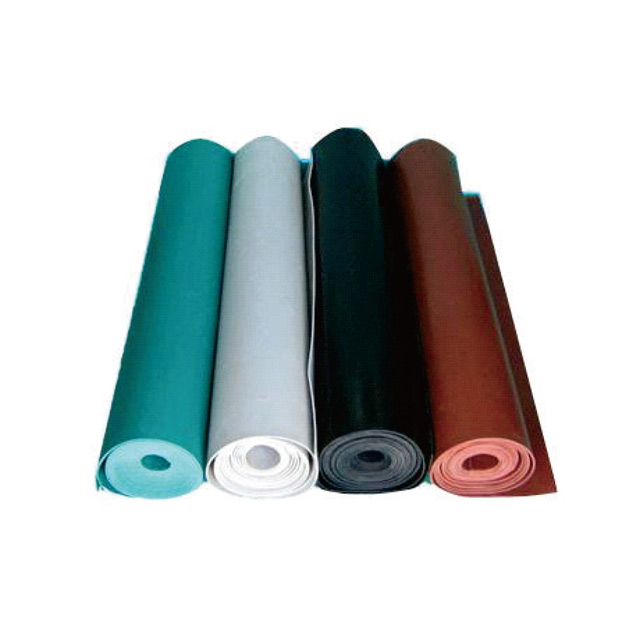
You can sometimes bypass high factory-level MOQs through strategic bundling. Combining related SKUs in a single purchase order helps reach tonnage minimums. For example, bundling rubber sheet rubber mat belts with standard industrial rolls maximizes shipping container space. Suppliers strongly favor consolidated orders. They streamline production runs and optimize raw material usage across multiple product lines.
Chart 1: Typical Lead Time Allocation for Rubber Production
| Production Phase | Standard Commercial Grade | Custom Specification Grade |
|---|---|---|
| Raw Material Sourcing | In-stock (0-2 Days) | Special-order (7-14 Days) |
| Machine Purging & Setup | None (Continuous Run) | Extensive (2-4 Days) |
| Vulcanization & Curing | Standard Pace (3-5 Days) | Controlled Pace (5-10 Days) |
| QA Testing & Lab Validation | Basic Checks (1-2 Days) | Rigorous Audits (5-7 Days) |
Large volume orders offer appealing unit-cost savings. However, you must meticulously weigh these discounts against warehousing expenses. Rubber degrades over time due to ozone exposure and temperature fluctuations. A long shelf life is never guaranteed. Wasted, degraded stock quickly destroys initial bulk savings. You must calculate the true cost of meeting a massive MOQ.
Blanket Purchase Orders (BPOs) solve massive MOQ hurdles efficiently. They allow you to negotiate smart terms. Follow these numbered steps to execute a successful BPO strategy:
This approach protects your immediate cash flow. It also frees up vital warehouse capacity. You get the pricing of a massive order without the logistical nightmare of storing it.
You need a mathematical approach to buffer stock planning. Never base your safety inventory purely on the average lead time. Averages hide disastrous logistical outliers. Instead, base your calculations on the supplier's maximum historical delay. If a standard 30-day order once took 65 days due to port strikes, use 65 days. This risk-adjusted buffer stock protects your production lines from sudden, unexpected stockouts.
Always vet the operational readiness of your partner before issuing a purchase order. Use a strict pre-order audit checklist to uncover hidden risks. Ask hard questions about their internal supply chain mechanics.
Service Level Agreements (SLAs) keep suppliers strictly accountable. Structure them to include realistic grace periods. Add defined financial remedies for severe delays. A trusted rubber sheet manufacturer respects clear contractual boundaries. They will accept penalty clauses, such as a two percent discount per week late. This ensures they prioritize your order on their factory floor.
Mission-critical production lines require robust backup plans. Split your volume across a primary and secondary supplier. An eighty-twenty split mitigates single-point-of-failure risks beautifully. If one factory faces an unexpected shutdown, your secondary source keeps your assembly line moving. Dual-sourcing ratios require slightly higher management effort. However, they provide unmatched peace of mind during global disruptions.
Low prices often mask severe logistical instability. You must separate reputable manufacturers from mere brokers. Brokers lack direct control over the production queue. They cannot guarantee your spot on the calendering line. Audit their facility certifications and equipment ownership carefully. True manufacturers invest heavily in their mixing and curing infrastructure.
Table 1: Manufacturer vs. Broker Evaluation Criteria
| Evaluation Metric | Direct Manufacturer | Trading Company / Broker |
|---|---|---|
| Production Control | Directly schedules machines | Relies on third-party availability |
| Quality Audits | In-house testing labs | Outsourced or skipped testing |
| Communication Speed | Immediate floor updates | Delayed via middlemen |
| Pricing Structure | Factory-direct rates | Includes markup margins |
A trustworthy rubber sheet supplier communicates openly and frequently. They proactively disclose upcoming machine maintenance schedules. They warn you about local holiday impacts, such as Lunar New Year closures. They track global freight embargoes and port congestions. This radical transparency prevents sudden supply shocks. It allows you to adjust your domestic production schedules proactively.
Quality failures destroy production schedules faster than shipping delays. Ensure your partner provides batch test reports (COAs) prior to shipment. Do not wait until containers arrive at your dock. Receiving an entire MOQ of out-of-spec material resets your lead time to zero. Early documentation review acts as an essential firewall. It guarantees compliance before the goods ever leave the factory.
Planning MOQ and lead time is a structural financial decision, not just a logistical one. Balancing volume discounts against inventory degradation risks requires precise calculations and strategic foresight. Buyers must look beyond surface-level quotes to uncover hidden supply chain bottlenecks.
Your immediate next step is to request a physical sample alongside a detailed lead-time breakdown. Ask the factory to explicitly itemize compounding, production, testing, and shipping timelines. Finalize Blanket Purchase Orders before signing annual contracts to protect your cash flow. Implement dual-sourcing ratios today to safeguard your mission-critical operations against tomorrow's unexpected delays.
A: Industry ranges vary significantly based on the material. Standard commercial rolls often require a 500kg to 1,000kg minimum. Custom-compounded tonnage usually demands 2,000kg or more. Factories need these volumes to justify the extensive energy used during calendering.
A: Yes, you can often negotiate lower volumes. Factories charge a "short run penalty" or setup fee. This premium covers their machine purging and recalibration costs. It becomes financially viable during emergency inventory gaps or early-stage prototyping.
A: Custom features heavily disrupt standard continuous runs. Changing colors requires deep cleaning of the mixing mills. Fabric insertion adds multiple passes through the calendering rollers. These mandatory cleaning and layering processes typically add three to seven days to the production cycle.
A: Absolutely. Elastomers suffer from natural ozone degradation over time. They also experience curing drift, altering their physical properties. Never over-order simply to meet a high factory MOQ. Balance your volume discounts against the very real risk of expired, unusable stock.