 |


| Quantity: | |
|---|---|
AX BX CX ZX
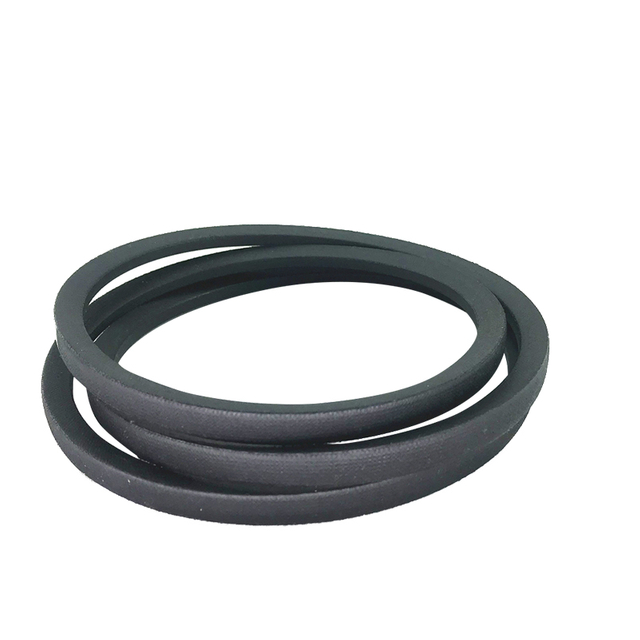
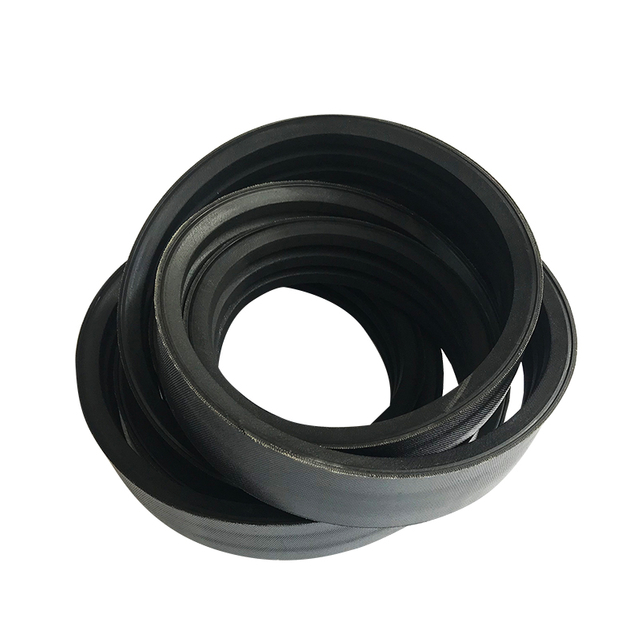
Cogged V belts feature a moulded notch construction on the inner surface that increases belt flexibility around small diameter pulleys. The notches, or cogs, are formed during the vulcanization process and are precisely spaced to reduce bending stress as the belt wraps around pulleys. This design allows the belt to operate on smaller sheave diameters than equivalent wrapped V belts while maintaining comparable power transmission capacity.
The tensile load is carried by high-strength cords running longitudinally through the belt body. These cords are made from polyester or aramid fibers, selected for their low elongation characteristics and fatigue resistance. The cords are precisely aligned and bonded within the rubber matrix to ensure uniform load distribution across the belt cross-section.
Unlike wrapped V belts that have a fabric outer layer, cogged V belts have raw edge sidewalls that provide direct rubber-to-sheave contact. This raw edge construction increases friction coefficient between the belt and pulley groove, improving torque transmission efficiency. The sidewalls are precision-ground to ensure consistent wedge dimensions and proper sheave fit.

Section | Top Width (mm) | Height (mm) | Angle | Length Range (mm) | Recommended Pulley Diameter (mm) |
|---|---|---|---|---|---|
ZX | 10 | 6 | 40° | 400 - 1500 | ≥ 50 |
AX | 13 | 8 | 40° | 600 - 3000 | ≥ 75 |
BX | 17 | 11 | 40° | 1000 - 5000 | ≥ 125 |
CX | 22 | 14 | 40° | 2000 - 8000 | ≥ 200 |
The cogged design increases the belt's surface area exposed to ambient air, improving heat dissipation during operation. Excessive heat is a primary factor in V belt degradation, and the enhanced cooling effect of the notched profile extends belt service life in high-temperature operating environments. The raw edge construction further contributes to heat transfer compared to fabric-wrapped alternatives.
Cogged V belts demonstrate lower energy consumption compared to wrapped V belts in comparable drive configurations. The reduced bending resistance from the notched profile means less energy is lost as the belt flexes around pulleys, particularly on smaller diameter sheaves. Over the operational lifespan, this efficiency difference contributes to lower overall operating costs for drive systems.
The moulded notch construction allows cogged V belts to bend around smaller diameter pulleys without the stress concentrations present in solid V belt cross-sections. This flexibility enables drive designers to use smaller sheaves, reducing drive package size and weight while maintaining power transmission capability. The belts are compatible with standard V belt sheave grooves of matching cross-section dimensions.
Heating, ventilation, and air conditioning equipment uses cogged V belts for fan and blower drives. The improved heat dissipation and efficiency characteristics support continuous operation in HVAC systems where belt replacement downtime affects building climate control. Multiple belt configurations are common in larger capacity units.
Machine tools, woodworking equipment, and packaging machinery deploy cogged V belts for main drive and auxiliary motion transmission. The raw edge construction provides consistent torque delivery during varying load conditions encountered in machining and processing operations. The compact drive size enabled by smaller pulley diameters supports equipment design optimization.
In automotive and heavy-duty vehicle applications, cogged V belts drive alternators, water pumps, cooling fans, and other engine accessories. The heat-resistant properties and flexibility make them suitable for under-hood operating conditions with elevated temperatures and limited installation space.
Farm machinery including combines, balers, and irrigation systems use cogged V belts for power transmission between engine and implement components. The belts operate in outdoor conditions with exposure to dust, moisture, and variable temperatures while maintaining transmission performance.
Cogged V belts are available in standard cross-sections designated ZX, AX, BX, and CX, corresponding to standard V belt sizes with the added cogged profile. The cross-section must match the sheave groove dimensions to ensure proper wedge contact and load distribution. Using an incorrect cross-section results in accelerated wear and reduced power capacity.
Belt length is selected based on the center distance between driving and driven pulleys and the desired speed ratio. Length tolerance is controlled during manufacturing to ensure consistent fit in matched belt sets. Maximum operating speed depends on the belt cross-section and pulley diameter, with larger sections typically rated for lower surface speeds.
When specifying cogged V belts for commercial procurement, factors including drive ratio, center distance, tensioning method, and environmental conditions should be documented. Multiple belt drives require matched sets to ensure equal load sharing. Tensioning arrangements should allow for proper installation tension and periodic adjustment to compensate for elongation.
Cogged V belts have notches on the inner surface that reduce bending stress and improve heat dissipation, while wrapped V belts have a fabric outer layer with a solid cross-section. Cogged belts offer higher efficiency, better heat resistance, and compatibility with smaller pulley diameters.
Standard cogged V belt sections include ZX, AX, BX, and CX, with length ranges varying by section. Custom lengths and special cross-sections can be produced for volume orders with specific application requirements.
Cogged V belts with the same cross-section dimensions can replace standard wrapped V belts in most applications, provided the sheave groove dimensions match. The cogged belts will operate at lower temperatures and with reduced energy consumption compared to the original wrapped belts.
The minimum order value for custom or non-catalog cogged V belt specifications is USD 1000. Standard catalog sizes may be available in smaller quantities, subject to current inventory status.
Bulk cogged V belt orders typically require 25 to 35 days for production. Lead time may vary based on order volume, specification complexity, and current production scheduling.