 |


| Quantity: | |
|---|---|
XPZ XPA XPB XPC
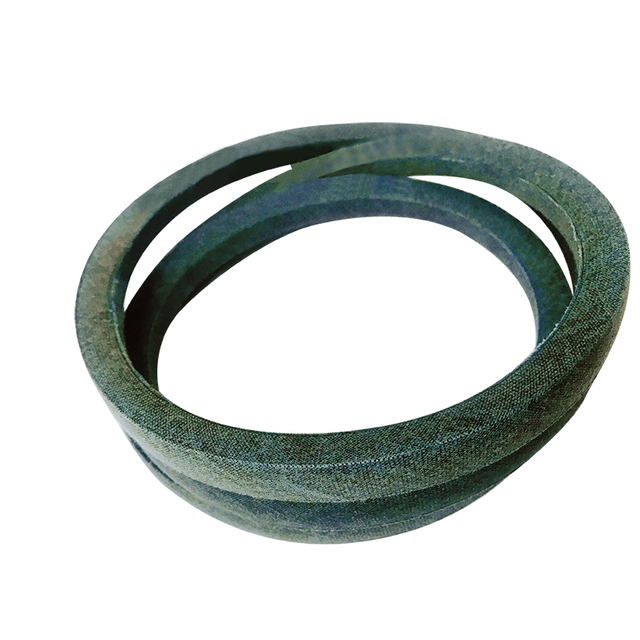
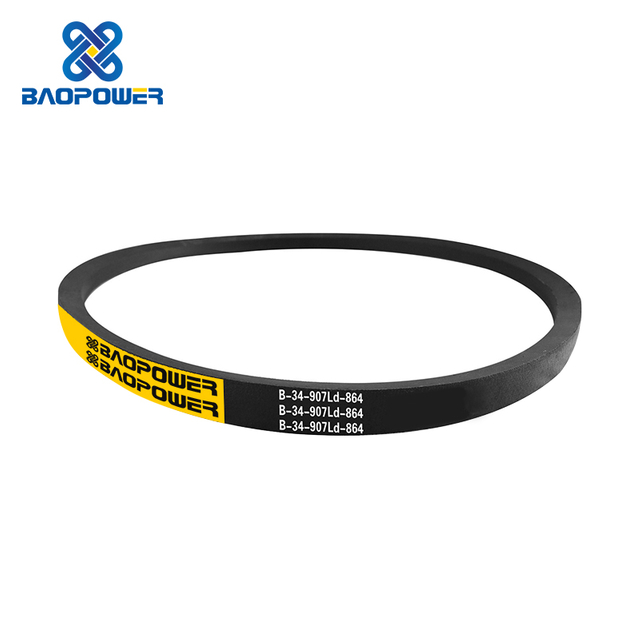
Cogged narrow V belts are power transmission belts with a narrow cross-section and notched (cogged) inner surface. The notches reduce bending stress as the belt wraps around pulleys, allowing operation on smaller sheave diameters than wrapped narrow V belts of equivalent section. Unlike synchronous belts, cogged V belts operate through friction between the belt sidewalls and pulley grooves.
The cogged profile increases the belt's ability to flex around small diameter pulleys by providing stress relief at the inner surface. The notches also increase surface area for heat dissipation, reducing operating temperature during continuous duty cycles. The sidewalls maintain a smooth, precision-ground finish for uniform contact with pulley groove walls.
A high-modulus polyester tensile cord runs along the pitch line to transmit tension load with minimal stretch. The rubber compound, typically EPDM or polychloroprene depending on the series, is formulated for flex fatigue resistance and heat stability. Short fibers embedded in the sidewall compound provide lateral rigidity to maintain wedge engagement under load.

Section | Top Width (mm) | Height (mm) | Angle (degrees) |
|---|---|---|---|
XPZ | 10.0 | 8.0 | 40 |
XPA | 13.0 | 10.0 | 40 |
XPB | 17.0 | 11.0 | 40 |
XPC | 22.0 | 14.0 | 40 |
Standard operating temperature range is -45°C to +70°C. Maximum belt speed varies by section: XPZ and XPA sections can operate at speeds up to 30 m/s, while XPB and XPC sections are rated for lower speeds with higher torque loads. Power transmission capacity scales with section size and pulley diameter per RMA power rating tables.
XPZ and XPA sections are used in machine tools, textile machinery, food processing equipment, and rotary screw compressors where drive centers are compact and power density requirements are high. The narrow profile saves space compared to classical V belt sections while maintaining comparable power capacity through improved contact pressure distribution.
XPB and XPC sections serve heavy-duty applications including agricultural machinery, construction equipment, and industrial fans. The cogged design is particularly beneficial in agricultural environments where belt drives encounter variable loads, debris exposure, and frequent start-stop cycles.
Production conforms to RMA (Rubber Manufacturers Association) IP-21 standard for narrow V belts, which defines dimensional tolerances, length classification systems, and performance test methods. Belt lengths are marked with standard designations corresponding to inside length or effective length per RMA numbering conventions.
Each production lot undergoes dimensional verification including top width, height, and angle measurement. Static tension tests confirm tensile cord integrity, and length matching ensures belts within a matched set fall within specified tolerance bands. Lot coding provides traceability to raw material batches, production date, and inspection records.
Cogged V belts can operate on smaller diameter pulleys because the notches reduce bending stress at the inner surface. They also dissipate heat more efficiently due to increased surface area. This allows higher speed ratios and more compact drive designs compared to wrapped V belts of the same cross-section.
Section selection depends on the transmitted power, drive speed ratio, center distance, and pulley diameters. Use the RMA power rating tables or drive design software to calculate the required section size and number of belts. Factors such as ambient temperature, duty cycle, and pulley material also influence the selection.
Standard cogged narrow V belts operate within a temperature range of -45°C to +70°C. Extended operation at the upper temperature limit may accelerate rubber aging. For high-temperature environments, heat-resistant compound versions are available with elevated temperature ratings.
Cogged narrow V belts require pulleys with groove dimensions matched to the belt section (XPZ, XPA, XPB, or XPC). They are not interchangeable with classical V belt pulleys (A, B, C sections) because the top width, height, and angle differ. Always verify pulley groove specifications match the belt section before installation.