Views: 0 Author: Site Editor Publish Time: 2026-09-15 Origin: Site


Unplanned equipment downtime creates major headaches during peak mowing season. Preventative maintenance gaps usually cause these unexpected delays. Belt failure remains a primary culprit for commercial landscapers and residential homeowners alike. Replacing a snapped band seems simple initially. However, ignoring the root cause of the previous failure guarantees another breakdown. Selecting the wrong material specification leads to recurring snapping, severe slipping, and potential pulley damage. You need a reliable, evidence-based approach to keep your equipment running smoothly. This guide provides a structured framework to help you evaluate wear accurately. We will show you how to select the correct replacement material and exact size. You will also learn crucial implementation best practices to achieve maximum service life. By following these steps, you prevent secondary damage and maximize operational uptime.
Visual diagnostics prevent secondary damage: Identifying glazing, cracking, or edge wear early prevents unexpected failures during high-load operations.
Material dictates performance: Upgrading to a wear resistant V belt (like Aramid/Kevlar or wrapped canvas) is necessary for clutching applications, while standard belts fail prematurely under these conditions.
Fit is absolute: "Close enough" sizing compromises tensioner systems; accurate measurement of top width and outside length is non-negotiable.
Holistic replacement: A new belt installed on seized pulleys or weak tensioner springs will immediately degrade.
We must establish strict physical and performance-based criteria for replacement. Evaluating these factors regularly prevents catastrophic mid-task failures. Physical wear shows up in distinct patterns across the rubber surface. You need to know exactly what to look for during routine inspections.
Sidewall Wear & Narrowing: Friction alters the original V-angle over time. The sidewalls become noticeably thinner. This narrowing causes the belt to drop deeper into the pulley groove. Eventually, it bottoms out. Bottoming out eliminates the crucial wedging force required for power transfer, causing massive slippage.
Glazing & Burning: Look closely for shiny, hardened sidewalls. These hard, plastic-like surfaces indicate severe slipping and excess heat. Heat alters the rubber compound permanently. A glazed surface cannot grip steel pulleys effectively.
Cracking & Separation: Localized chunking usually happens when debris gets trapped in the pulley groove. Uniform cracking across the inner surface suggests normal aging and thermal degradation. Deep bottom cracks mean the rubber has oxidized completely and lost all necessary flexibility.
Beyond physical signs, performance drops tell a clear story. Replacing your lawn mower drive belt becomes absolutely necessary when you notice specific operational issues. You might experience a sudden loss of ground speed on inclines. Blade RPMs often drop sharply under heavy grass loads. Persistent squealing during deck engagement signals excessive slipping. You might also feel aggressive vibration transferring straight through the chassis. These mechanical symptoms confirm the drive system can no longer handle standard operational torque.
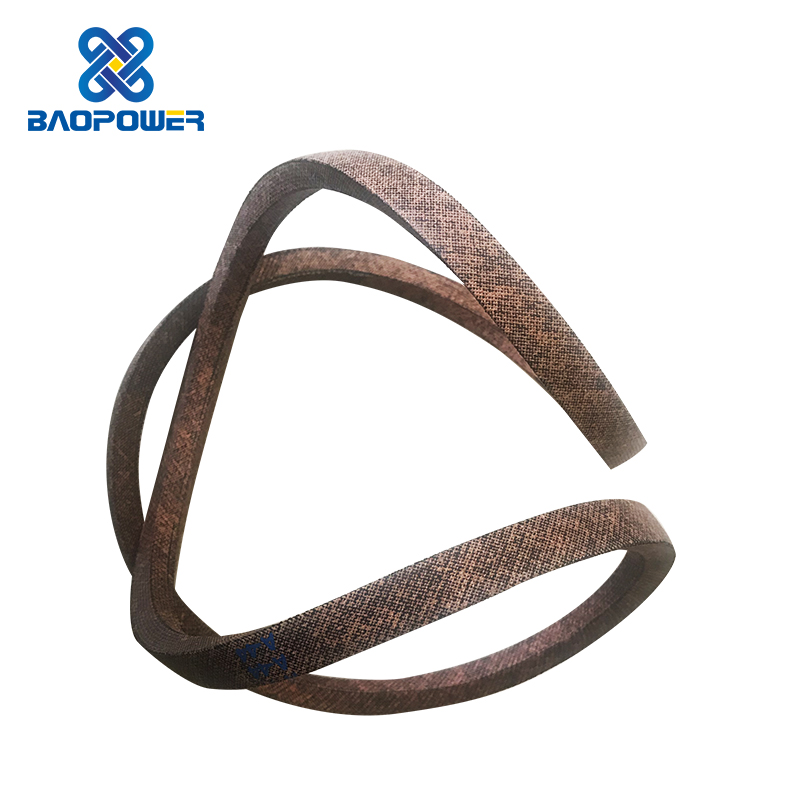
Verifying dimensions accurately prevents premature wear and costly secondary damage. Matching OEM specifications remains the only foolproof method for sizing a lawn mower V belt correctly. Using "close enough" measurements compromises tensioner systems and guarantees failure.
Understanding industry standards simplifies the measuring process. Fractional Horsepower (FHP) sizes usually carry 3L, 4L, or 5L designations. The prefix number dictates the top width in eighths of an inch. A 4L designation means a 4/8-inch (or 1/2-inch) top width. Classical industrial belts use A, B, or C series labels. An A-series industrial belt also measures 1/2-inch across the top. However, these two systems are not perfectly interchangeable. The internal cord placement sits at different depths. This slight geometric shift causes binding in sensitive clutching systems. To measure accurately, wrap a flexible tailor's tape around the outer edge to find the Outside Circumference (OC). Never rely on an old, stretched unit for your baseline measurement.
Relying on generic hardware store belts introduces massive operational risk. Standard industrial belts rarely match the precise tolerances required by outdoor power equipment. A reliable mower transmission belt requires exact length parameters. Proper clutch engagement depends entirely on this specific length. If it measures slightly short, the blades will spin dangerously even when disengaged. If it runs long, the tensioner arm cannot apply enough force to prevent slipping. Always prioritize exact OEM cross-reference numbers.
Fractional Horsepower vs. Classical Series Equivalents | |||
FHP Designation | Top Width | Classical Equivalent | Typical Equipment Application |
|---|---|---|---|
3L Series | 3/8 Inch | Not Applicable | Light-duty drives, snowblower augers |
4L Series | 1/2 Inch | A Series | Standard residential mower decks |
5L Series | 5/8 Inch | B Series | Commercial heavy-duty main drives |
Operational intensity dictates your material choices. Selecting the wrong cover style or internal cord structure causes immediate problems. You must guide your purchasing decision based on specific equipment demands and environmental factors.
Choosing standard raw edge rubber over a specialized canvas rubber V belt often leads to quick failure in outdoor equipment. Wrapped belts are absolutely essential for manual clutching applications. The fabric cover acts as a sacrificial friction buffer. When you throw the PTO lever, the belt slips for a fraction of a second. This controlled slip absorbs the massive shock of spinning up heavy steel blades. It prevents the rubber from melting. Raw edge belts offer superior grip and excellent flexibility. However, they grip too aggressively for clutching. They will snap violently or burn out the engine pulley if used in a manual PTO system.
Internal cord construction determines ultimate tensile strength. Standard polyester cords work perfectly fine for light-duty chores. They handle continuous, even loads well. But heavy shock loads demand higher structural integrity. Hitting hidden tree roots or engaging dual blades creates massive torque spikes. Aramid or Kevlar cords absorb these spikes without snapping. Upgrading to a wear resistant V belt featuring Aramid cords extends lifespan dramatically. These high-strength cords offer nearly zero stretch under extreme tension.
Cross-industry material sourcing reveals a highly effective maintenance trick. Many landscaping professionals source an agricultural V belt for their commercial zero-turn mowers. Farm equipment operates in brutal conditions filled with extreme dust, chaff, and heat. Dust acts as an abrasive grinding paste on rubber. Belts built for agricultural conditions utilize highly durable compounds. They yield a much better return on investment. They easily outlast standard retail options when subjected to harsh, daily landscaping environments.
Material and Construction Performance Comparison | |||
Cover Style | Cord Material | Clutching Suitability | Shock Load Resistance |
|---|---|---|---|
Raw Edge | Polyester | Poor (Grabs instantly) | Low to Moderate |
Wrapped (Canvas) | Polyester | Excellent (Slips safely) | Moderate |
Wrapped (Canvas) | Aramid / Kevlar | Excellent (Slips safely) | Very High |
Proper implementation steps ensure your new investment does not fail prematurely. Understanding mechanical prerequisites prevents immediate post-installation breakdowns. A rigorous pre-installation hardware audit serves as your first line of defense.
Start by inspecting the V-pulleys carefully. Look for severe V-groove wear, rust pitting, or sharp burrs. Pulleys often rust over the winter months. Rust creates a harsh sandpaper effect. A pitted pulley acts like a grinder, destroying a new fabric cover in just a few hours. Next, test the idler pulleys and spindle bearings. Give them a firm spin by hand. They must rotate smoothly without any drag, wobble, or grinding noises. A seized idler bearing will melt a new belt instantly. Finally, evaluate the tensioner spring. Springs lose their tensile memory over time. A stretched spring ruins new belts immediately. It cannot apply adequate pressure, allowing constant slippage and heat buildup under load.
Follow these exact steps to guarantee a successful installation:
Disconnect power sources: Always disconnect spark plugs or battery terminals before lifting the deck or reaching near pulleys. Safety must always come first.
Clear all debris: Remove packed grass, twigs, and hardened dirt from the pulley guards and deck surface. Debris forces the belt out of alignment.
Follow routing diagrams exactly: Manufacturer diagrams show the precise serpentine path. Avoid reverse-bending standard belts over back-side idlers unless the belt is specifically engineered for reverse flexing.
Inspect belt guides: Check the small metal pins positioned near the engine pulley. These guides keep the belt from jumping off when disengaged. If bent inward, they will continuously shred the back cover.
Verify alignment manually: Spin the entire system slowly by hand. Check that the belt seats perfectly within every single groove before starting the engine.
Post-purchase failure modes frustrate many owners. Addressing these common issues quickly builds mechanical confidence. Diagnosing the root cause prevents you from wasting money on repeated replacements.
Belt flipping happens frequently and stops the blades instantly. This usually points directly to misaligned pulleys. Check for bent mounting brackets on the mower deck. Prying a deck out of the mud often bends these critical brackets. Sometimes, a simple pebble or hardened dirt clod lodged deep in the pulley groove forces the rubber out of alignment. Never use a crowbar to pry a new belt onto a pulley, as this stretches the cords unevenly and encourages rolling.
Immediate smoking indicates severe mechanical binding. Identifying a locked spindle is usually your first troubleshooting step. If the cutting blades cannot turn freely by hand, the engine shaft will burn right through the stationary rubber in seconds. Incorrect routing also causes instant smoking. Mower decks have complex routings. Missing one idler alters the geometry completely. Using a non-clutching raw edge style in a manual clutching application will result in the same violent snapping.
Rapid stretching confuses many operators. You must differentiate between normal break-in stretch and actual structural failure. All new belts experience minor slackening after the first two hours of operation. You may need to adjust the tensioner slightly. However, extreme, continuous sagging means the internal structural cords are failing. This cord failure usually occurs because you installed an undersized unit. An undersized loop runs under excessive constant tension. This extreme tension tears the internal structural cords apart from the inside out.
Proper mower maintenance relies entirely on accurate diagnostics and rigorous installation standards. Precise material selection matters just as much as getting the right length. You cannot ignore pulley health or tensioner spring condition.
Prioritize precise matches: Always verify exact OEM cross-reference numbers rather than guessing lengths at local hardware stores.
Upgrade materials strategically: Choose canvas-wrapped or Aramid-corded options for high-stress drive systems and heavy-duty deck applications.
Audit hardware health: Check your current setup carefully. Evaluate pulley alignment, remove rust, and test tensioner spring strength before installation.
Record your data: Write down your machine's exact model and serial numbers before purchasing any replacements to ensure total compatibility.
A: No. Automotive belts are designed for continuous high speed but not for the clutching (engaging/disengaging) and back-bending operations typical in mowers. They will burn or snap quickly.
A: Deck belts endure high shock loads and frequent clutching, requiring wrapped covers and strong cords (Aramid). Transmission belts transfer consistent power to the transaxle and may have different flex and grip requirements.
A: Under normal residential use, 3–4 years or 100–150 hours. Commercial applications may require seasonal replacement. Lifespan is highly dependent on keeping the deck clean and pulleys aligned.
A: Mower belts often utilize an idler pulley tensioning system. The belt will have slack until the tensioner is engaged by the lever or PTO switch.