Views: 0 Author: Site Editor Publish Time: 2026-09-07 Origin: Site


Upgrading power transmission systems requires balancing drive efficiency, space constraints, and component lifespan. Mechanical engineers face tough decisions when designing modern machinery. You need reliable, long-lasting performance without sacrificing compact equipment layouts. Standard wrapped belts frequently fail prematurely in high-speed, tight, or high-temperature configurations. They suffer severe flexural stress. They crack easily and degrade rapidly under intense thermal loads. This reality leaves maintenance teams battling unexpected machine downtime and frequent component replacements.
A cogged V belt offers a robust engineering solution to these exact operational challenges. Our objective is to provide a strict, technical evaluation of these upgraded drive components. We will help system designers determine if this structural modification justifies the transition. You will discover the underlying mechanics of stress relief, thermal management, and ideal sheave fit. You can then make highly informed procurement decisions for your specific industrial applications.
Bending Stress Relief: The notched design allows for operation over smaller pulley diameters without inducing premature flex-cracking.
Thermal Efficiency: Increased surface area and reduced internal friction inherently lower operating temperatures, extending belt life.
Efficiency vs. Cost: While initial procurement costs are higher, the 2–3% gain in energy efficiency often yields a net-positive ROI in continuous-duty applications.
System Caveats: They are not a universal fix; applications with heavy abrasive debris or extreme noise restrictions require careful evaluation before switching.
We must first establish a clear design baseline. Standard smooth belts utilize a protective fabric wrapper around the entire rubber core. This jacket protects the internal components from external contaminants. It also allows a small degree of controlled slip. Conversely, a raw edge cogged belt completely removes this fabric wrapper on the sidewalls. The exposed elastomeric core directly contacts the metal sheave grooves. This structural difference fundamentally changes how the component interacts with the drive geometry.
Industry terminology often creates confusion during the selection process. Maintenance professionals frequently refer to this component as a notched V belt or sometimes a toothed V belt. We must clarify this nomenclature. The molded "teeth" serve a highly specific structural function. They exist strictly for physical flexibility and ambient heat dispersion. They do not provide synchronous timing capabilities. They do not engage corresponding teeth on a sprocket. The power transmission remains entirely dependent on sidewall friction.
Material composition determines overall performance and longevity. The standard construction of this specialized rubber transmission belt relies on advanced polymer science. Manufacturers typically utilize highly engineered elastomeric compounds like EPDM (Ethylene Propylene Diene Monomer) or Neoprene. EPDM maximizes aggressive grip on the raw edges. It strongly resists environmental degradation from ambient ozone, ultraviolet light, and harsh industrial chemicals. High-strength tensile cords sit embedded just above the neutral axis. Manufacturers construct these cords from tightly wound polyester or Kevlar. These cords handle the primary load forces. They prevent unwanted elongation under heavy torque.
Mechanical drives frequently encounter the severe "pulley fit" problem. Standard smooth belts suffer immense structural stress when forced around sub-optimal minimum diameters. The bottom section of the rubber compresses violently against itself. Simultaneously, the top section stretches under extreme tension. This aggressive push-pull dynamic tears the internal rubber matrix apart over time. You will quickly observe deep flex-cracking along the bottom surface. The structural integrity fails rapidly under these constrained conditions.
The molded cogs act directly as engineered stress-relief zones. They solve this geometric constraint efficiently. The physical notches compress into empty void spaces when bending around tight radii. The material flexes naturally instead of fighting the sharp curve. The internal rubber molecules experience dramatically less internal shear force. You eliminate the destructive bottom-compression entirely. This simple mechanical alteration prevents the early onset of flexural fatigue.
This stress-relief mechanism introduces profound design implications for system engineers. We can categorize these benefits directly:
Compact System Architecture: Engineers design much tighter drive configurations. You can pack higher power transmission capabilities into incredibly confined machine guards. This space-saving trait benefits modern modular equipment designs.
Favorable Speed Ratios: System designers utilize significantly smaller drive pulleys. You achieve aggressive speed reductions directly at the primary drive stage. You accomplish this without sacrificing essential sidewall friction or grip.
Reduced Bending Resistance: The drive motor expends less electrical energy merely bending the rubber around the corner. This translates immediately to more usable power directed to the driven load.
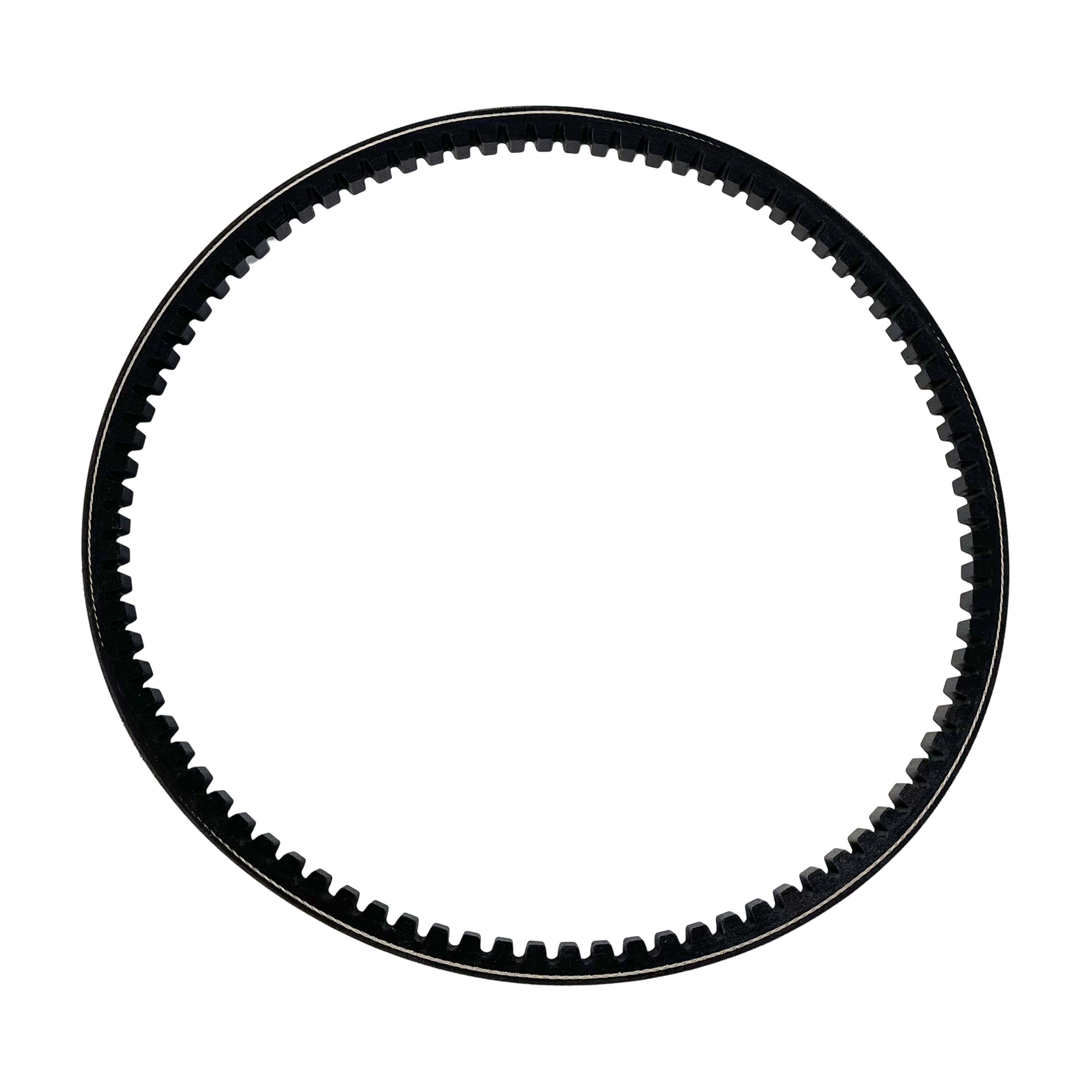
Heat acts as the primary destructive force in any power transmission system. We must thoroughly break down the specific sources of this thermal load. Internal friction causes significant heat buildup. Engineers call this hysteresis. The continuous bending and straightening of the elastomer generates molecular friction. Additionally, the ambient operating environment contributes secondary heat loads. Hot engine bays, enclosed machine guards, and nearby furnaces elevate the baseline temperature. Elastomers degrade rapidly under these high thermal conditions. The rubber hardens, glazes over, and eventually shatters.
The aerodynamic cooling effect of the notches provides profound operational benefits. The molded cogs act precisely like passive cooling fins on an engine block. They rapidly agitate the surrounding air during high-speed rotation. This physical geometry increases the overall exposed surface area. The belt sheds stored heat into the ambient air much faster than a smooth wrapper. Furthermore, the reduced bending resistance directly equates to less hysteresis. You generate significantly less internal heat from the very start. The component runs inherently cooler.
We see a massive overlap between extreme vehicle environments and heavy industrial applications. The automotive cogged belt evolved specifically to handle brutal under-hood conditions. Modern engines produce intense radiant heat and operate at extreme RPMs. Automotive engineers required a solution resistant to thermal glazing and rapid fatigue. These exact same engineering principles apply directly to heavy industrial equipment. You will frequently utilize these advanced designs on demanding centrifugal blowers, massive HVAC air handlers, and high-volume fluid pumps.
Thermal Parameter | Standard Wrapped Belt | Cogged Belt Design |
|---|---|---|
Internal Hysteresis | High heat generation due to thick, continuous rubber mass. | Low heat generation due to relieved bending zones. |
Surface Area | Minimal surface area limits ambient heat transfer. | Expanded surface area via notches acts as cooling fins. |
Ambient Tolerance | Prone to glazing and cracking in enclosed guards. | Maintains elasticity longer in high-temperature environments. |
Buyers must strictly evaluate the performance-to-cost ratios before standardizing a facility. You will spend a noticeable premium upfront on cogged variants. The complex manufacturing and molding processes dictate this higher initial cost. However, long-term continuous operations reveal a different reality. High-duty cycle applications frequently capture a 2–3% direct gain in energy efficiency. Less motor energy wasted on bending resistance means lower electrical consumption at the meter. Furthermore, the extended operational lifespan dramatically stretches your routine maintenance intervals. You dispatch fewer technicians for tensioning adjustments and replacements.
Grip mechanics heavily influence the selection process. We must contrast the physical wedging action. Fabric-wrapped edges provide a relatively smooth, controlled friction surface. Raw edges expose the high-friction elastomeric core directly to the sheave. They deliver a substantially higher coefficient of friction. They wedge aggressively into the metal grooves under tension. This aggressive raw-edge grip massively reduces unwanted slip during sudden torque spikes. You transfer mechanical power more effectively from the driver to the driven shaft.
Despite these distinct advantages, standard wrapped options still win in highly specific engineering scenarios. You must identify when to avoid raw-edge upgrades. Clutching drives represent a perfect example. Agricultural equipment often uses smooth belts as a crude physical clutch. You intentionally slip the belt to engage the load smoothly. A raw-edge belt grabs too violently for this task. It causes aggressive jerking and stalls the motor. Additionally, highly abrasive environments dictate caution. Environments filled with dense agricultural dust or mining grit wear out raw edges quickly. The fabric wrapper serves as a vital shield against environmental abrasion.
Application Characteristic | Recommended Solution | Primary Engineering Reason |
|---|---|---|
Extremely tight sheave diameters | Cogged / Notched | Prevents bottom-compression and flex cracking. |
Deliberate clutching/slipping required | Standard Wrapped | Smooth fabric allows controlled, gradual engagement. |
Continuous 24/7 HVAC fan operation | Cogged / Notched | Maximizes energy efficiency and thermal dispersion. |
Heavy agricultural dust or rock grit | Standard Wrapped | Jacket protects the rubber core from abrasive wear. |
System integrators must acknowledge distinct implementation risks before executing a facility-wide upgrade. Abrasive debris accumulation poses a severe hazard. Dusty environments, gravel yards, or wood manufacturing facilities create dense particulate clouds. This flying debris readily gets packed tightly into the empty cogs. The pressure from the sheaves compacts the dust into a hard, solid mass. This packed material effectively turns the inner surface into a destructive grinding wheel. It damages the flexible elastomeric structure rapidly. More importantly, it continuously erodes the expensive metal sheave grooves.
Acoustic output demands strict attention during the design phase. The physical air displacement caused by the notches changes the drive's acoustic signature. Fast-moving cogs trap small pockets of air against the sheave groove. The rapid release of this trapped air produces a distinct sound. It frequently results in a higher-pitched operational whine compared to silent, smooth alternatives. Facilities enforcing strict occupational noise regulations require careful acoustic evaluation. You might violate local decibel limits if you deploy dozens of these drives in an enclosed room.
Sheave wear and alignment tolerances become absolutely critical upon implementation. Raw-edge walls grip metal surfaces with intense aggression. This high coefficient of friction exposes any mechanical flaws in your setup. Angular or parallel misalignment forces the tough rubber to drag sideways across the metal. Because the raw edge refuses to slip easily, it accelerates wear on the metal sheaves rather than just degrading the rubber. Strict installation protocols are highly recommended during any rollout.
Common best practices for successful implementation include:
Laser Alignment Tools: Utilize precision laser tools instead of a straight-edge to ensure absolute parallel and angular alignment.
Sheave Groove Gauges: Inspect existing pulleys with specialized profile gauges. Raw edges demand perfectly matched groove angles to wedge correctly.
Debris Guarding: Install adequate physical shielding to prevent heavy particulates from entering the drive envelope.
Run-in Tensioning: Perform a secondary tensioning check after the first 24 hours of operational run-in.
Evaluating power transmission components requires strict attention to mechanical variables and operational environments. You should systematically shortlist cogged configurations for compact drive designs, extreme ambient temperatures, and energy-critical continuous operations. Their relieved bottom sections completely eliminate the flexural fatigue inherent in smooth wrappers. Their aggressive raw edges transfer maximum torque without slipping. They solve the precise thermal and physical limitations that plague legacy drive systems.
We advise readers to execute a comprehensive technical audit before ordering replacements. Inspect your current drive's sheave conditions immediately. Measure the exact minimum diameters to confirm your geometric constraints. Evaluate the surrounding environment for heavy abrasives or strict noise limits. By validating these specific mechanical parameters, you ensure your newly upgraded system delivers the reliability and efficiency you expect.
A: Yes, assuming the cross-section profile (e.g., BX versus B) exactly matches the existing setup. However, you must inspect the metal sheaves thoroughly for uneven wear. Raw edges grip aggressively and remain much less forgiving of worn, dished-out grooves compared to wrapped belts.
A: No. The internal tensile cords dictate overall stretch, not the outer rubber cogs. Manufacturers utilize high-strength polyester or Kevlar cords in both designs. Run-in elongation and routine tensioning rules remain identical for both drive types.
A: No. A timing belt utilizes a positive-engagement drive system where teeth interlock perfectly with a specialized sprocket. A notched or toothed V-belt relies entirely on sidewall friction to transmit power. The notches exist solely to increase flexibility and dissipate heat.