Views: 0 Author: Site Editor Publish Time: 2026-08-30 Origin: Site


Selecting the correct power transmission belt is a matter of operational reliability, not just dimensional matching. Misalignment between belt specifications and drive conditions leads to premature failure. This inevitably triggers unplanned downtime and increases maintenance demands. While raw edge cogged belts offer higher energy transfer rates, the classic wrapped V belt remains the standard for harsh environments. Its rugged fabric cover protects the inner core from abrasive debris. It also shields sensitive elastomers from destructive oil exposure.
Furthermore, they excel in clutching applications where controlled slip is necessary during high-torque startups. This guide breaks down the critical technical evaluation criteria. You will learn how to match these specific belts to unique environmental and mechanical drive conditions. We explore load profiles, cross-section standards, and industry-specific frameworks to ensure optimal long-term performance.
Drive environment (temperature, oil, dust) dictates cover fabric compound requirements.
Wrapped V belts prioritize durability and slip-tolerance over raw energy efficiency, making them ideal for clutching and high-shock loads.
Correct cross-section selection must align with RMA/ISO standards and existing sheave dimensions to prevent localized wear.
Industry-specific applications (e.g., HVAC vs. agriculture) require different tensioning protocols and maintenance schedules.
You cannot specify a durable drive system without first auditing the operating environment. A belt fails rapidly if it lacks the correct defensive properties for its surroundings. We must establish baseline conditions before referencing any manufacturer catalog.
Drives face four primary environmental threats. These include ambient heat, oil exposure, abrasive dust, and high moisture. Ambient heat bakes standard elastomers, causing them to harden and crack. Oil exposure causes rubber swelling and catastrophic frictional loss. Abrasive dust acts like sandpaper on the pulley grooves. Moisture degrades internal tension cords over time.
The outer fabric cover of an industrial wrapped V belt resists these elements effectively. It acts as a tough, sacrificial barrier. Woven textile covers absorb minor oil splashes. They deflect abrasive chaff away from the load-bearing cords. Exposed rubber edges degrade much faster under similar harsh conditions.
Every application exerts a unique stress signature on the drive. We categorize these signatures by load type to determine required cord strength.
Uniform Loads: These applications exhibit smooth, consistent torque. Centrifugal pumps and small exhaust blowers fall into this category. They require standard tension cord materials.
Light Shock Loads: These systems experience sudden, moderate torque spikes. Mixers and line shafts commonly generate light shock. The belt must stretch slightly to absorb the impact.
Heavy Shock Loads: These drives face brutal, instantaneous stalling forces. Rock crushers and heavy drop hammers are prime examples. The belt must survive extreme tension spikes without snapping.
Defining success prevents arbitrary selection. A successful installation meets specific, measurable criteria. Your primary metric might involve achieving 25,000+ hours of continuous operation in a clean environment. Alternatively, success in a mining application might mean minimizing tensioning intervals to once per quarter. For clutching drives, surviving intermittent slip without glazing the cover determines success.
Selecting the correct cross-section is non-negotiable. The belt profile must perfectly wedge into the pulley groove to transmit power efficiently. Guessing dimensions leads directly to rapid sidewall wear and efficiency losses.
Structural differences dictate power capacity and space requirements. Classical cross-sections include A, B, C, and D profiles. They feature a wider top width relative to their depth. They perform well on larger diameter pulleys. Narrow cross-sections include SPZ, SPA, SPB, and SPC profiles. North American standards refer to these as 3V, 5V, and 8V. Narrow profiles provide significantly higher power density. They carry more load in a smaller physical footprint.
Profile Category | Common Designations | Primary Advantage | Typical Application Size |
|---|---|---|---|
Classical | A, B, C, D, E | High tolerance for misalignment, wide availability | Medium to large drives, clutching |
Narrow (Metric) | SPZ, SPA, SPB, SPC | High power density, smaller sheave diameters | Compact, high-horsepower drives |
Narrow (Imperial) | 3V, 5V, 8V | Reduced drive weight, lower overhung load | Heavy industrial equipment |
You must strictly match the belt profile to the existing pulley groove angles. RMA and ISO standards govern these dimensions. A mismatched profile sits too high or too low in the groove. This improper seating prevents uniform load distribution. The resulting localized friction burns the fabric cover and destroys the internal cords.
Internal materials dictate overall strength. Core tension cords handle the actual pulling force. Manufacturers commonly use polyester cords for standard applications. Polyester resists stretching well under uniform loads. Heavy shock applications require aramid or Kevlar cords. Aramid refuses to stretch under extreme stress. Below the cords sits the compression section. Standard rubber V belt compounds work for normal temperatures. Engineered elastomers, like EPDM, provide necessary stability when ambient temperatures exceed 140°F (60°C).
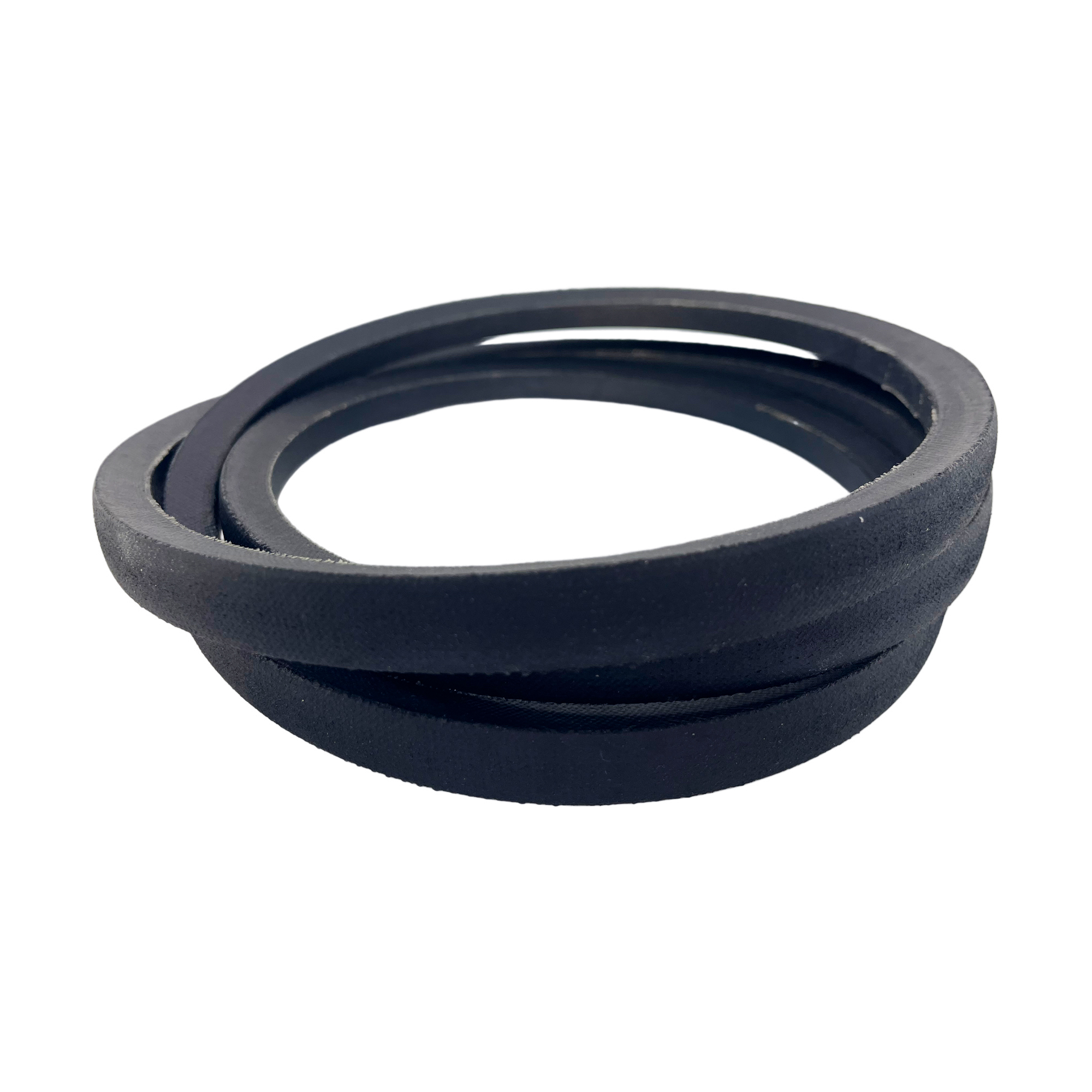
Engineers constantly balance performance variables. Choosing between wrapped and raw edge constructions requires understanding specific mechanical trade-offs. You must evaluate the application's true demands.
We openly acknowledge the known performance trade-off in power transmission. Raw edge cogged belts offer roughly 2-3% higher energy efficiency. They flex easily over smaller pulleys due to their notched design. However, wrapped belts provide vastly superior durability in harsh conditions. They tolerate minor sheave misalignment much better. They handle heavy shock loads without suffering cord pull-out.
Feature | Wrapped Construction | Raw Edge Construction |
|---|---|---|
Energy Efficiency | Moderate (~94-95%) | High (~97-98%) |
Shock Load Tolerance | Excellent | Moderate |
Debris Resistance | Superior (Fabric protection) | Poor (Exposed rubber) |
Misalignment Tolerance | High | Low |
Friction control is a critical protective feature. The fabric wrap allows for controlled slippage upon startup. This slip prevents motor stalling in high-inertia setups. When a massive blower fan starts, it resists turning. The wrapped cover slips slightly until the fan builds momentum. Raw edge belts grip aggressively. This immediate grip can snap cords or trip electrical breakers during heavy startups.
You must evaluate long-term maintenance cycles. Wrapped options often extend the operational lifespan in highly abrasive environments. Standard belts might fail every three months in a dusty sawmill. A properly specified wrapped design can extend that replacement interval to a full year. Calculating the true value requires factoring in this reduced maintenance frequency and fewer planned shutdowns.
Generic selection methods fail in specialized industries. Different sectors impose distinct operational demands. You must align your selection logic with the specific realities of your field.
HVAC and Blower Systems:
Commercial air handling units demand specific properties. Selecting a fan drive belt focuses heavily on noise reduction and continuous duty cycles. These drives run constantly for months. They require excellent heat dissipation. Furthermore, HVAC belts must possess static conductivity. This prevents dangerous static charge buildup near sensitive electronic controls. Always verify ISO 1813 compliance for static conductivity in these environments.
Agriculture and Outdoor Power Equipment:
Farming equipment operates in brutal conditions. Choosing an agricultural V belt requires a focus on debris resistance. Combines and tractors generate massive amounts of abrasive chaff and dust. The fabric cover must resist this constant grinding. Additionally, agricultural drives frequently utilize backside idlers to tension the system. The belt must tolerate severe reverse bending without cracking the outer cover. They must also survive frequent clutching engagements.
Heavy Industrial Processing:
Mines, quarries, and lumber mills present the toughest challenges. Crushers, industrial mixers, and heavy conveyors demand maximum strength. High starting torques are the absolute norm here. You need belts built with aramid tension cords. The covers must resist heavy oil contamination and rock dust. Stiff, heavy-duty wrapped profiles prevent the belt from flipping over inside the sheave groove during sudden load jams.
Even the best engineering calculations fail if installation practices fall short. You must verify component quality and enforce strict installation protocols. Poor execution ruins perfectly specified drives.
Never assume out-of-the-box perfection. You must physically verify belt quality upon receipt. Check the entire length for fabric overlap anomalies. Bulges at the overlap seam cause severe drive vibration. Inspect the sidewalls for any cord exposure. Cords peeking through the fabric indicate manufacturing defects. Bend the belt slightly. If the cover feels unusually stiff or brittle, it suffered poor storage conditions and will fail prematurely.
Throw away the "rule of thumb" tensioning method. Pressing on the span with your hand provides zero reliable data. You must utilize calibrated tools. Require your technicians to use sonic tension meters. These devices measure the exact vibration frequency of the span. Deflection gauges also work well for verifying force values. You must meet the manufacturer-specified tensioning values exactly. Under-tensioning causes destructive slip. Over-tensioning destroys motor bearings rapidly.
Wrapped drives undergo rapid physical changes immediately after installation. They require a mandatory run-in period. This initial phase typically lasts 24 to 48 operating hours. During this window, the tension cords stretch slightly. More importantly, the fabric cover seats deeply into the sheave grooves. This seating reduces the effective operating tension. You must perform a mandatory re-tensioning procedure after this run-in period. Skipping this step guarantees premature slippage and cover glazing.
Choosing the right wrapped transmission component requires rigorous attention to detail. It remains an exercise in matching mechanical tolerances to harsh environmental realities. You cannot rely on dimensional matching alone to ensure reliability. Heat, debris, and shock loads dictate the required material compounds and structural profiles.
Begin your selection process by auditing your current sheave wear. Document ambient operating temperatures accurately. Calculate the nominal horsepower and factor in appropriate service factors for shock loads. Only after gathering this data should you reference manufacturer selection tables.
Your next step is proactive application sizing. Consult a specific engineering catalog for your industry. Utilize a proprietary drive-design calculator to verify your expected load capacities. If your environment features extreme heat or abrasive contamination, contact technical sales for custom application sizing and compound recommendations.
A: No. Mixing causes immediate load-sharing failures. A used belt has already stretched and worn narrower. The new belt sits higher in the groove and carries the entire mechanical load. This intense localized stress causes rapid cord snapping. You must always install a completely new, factory-matched set.
A: First, measure the top width across the widest section using calipers. Next, measure the outside circumference using a flexible tape measure. Compare these dimensions to standard profile charts. Note the distinction between effective length and datum length, as catalogs use specific measurement lines depending on the profile type.
A: Some classical wrapped types tolerate backside idlers, but you must exercise caution. Specific constructions are engineered specifically for reverse bending. Operating standard belts outside their designed flex limits causes rapid cover cracking and cord fatigue. Always verify the manufacturer's reverse-bend rating before implementing backside tensioning.