Views: 0 Author: Site Editor Publish Time: 2026-07-30 Origin: Site


Heavy industrial operations face massive challenges every day. Thermal degradation destroys materials quickly under extreme environmental conditions. This rapid deterioration causes significant safety hazards and catastrophic downtime. Plant managers and buyers often struggle here. They mistakenly apply standard components to hostile thermal environments. Misapplied materials lead to premature hardening and severe surface cracking. They also trigger sudden, dangerous splice failures.
You need an objective framework for accurate selection. We help you evaluate actual thermal loads and advanced material science. We also explore verifiable testing standards used globally. You will learn to correctly categorize temperature types and understand compound limitations. You will discover how rubber chemically reacts under intense stress.
We also prepare you to demand rigorous laboratory data. This guide relies on physical evidence rather than generalized assumptions. Our strict strategy ensures you secure a durable, reliable solution for demanding applications.
Distinguish Temperature Types: The surface temperature of the belt—not just the bulk material temperature—dictates the required belt grade.
Verify Rubber Compounds: EPDM and SBR offer different thermal and abrasion resistance profiles; proper selection prevents surface cracking and cover loss.
Demand Testing Proof: Reliable suppliers provide accelerated aging test data (e.g., ISO 4195) rather than just theoretical temperature limits.
Splicing is the Weak Link: The bonding materials must match the thermal rating of the belt to prevent catastrophic joint failure.
Understanding true heat exposure requires extreme precision. Buyers frequently miscalculate actual thermal loads during facility upgrades. They measure only the conveyed material itself. This narrow approach causes severe specification errors. You might over-spec and waste critical resources. Alternatively, you might under-spec and invite absolute disaster. A bulk material temperature of 300°C sounds highly alarming. However, the rubber base rarely absorbs that full ambient heat.
The surface temperature tells the true operational story. We must evaluate exactly how much heat the rubber absorbs. It acts as the critical metric for component survival. Bulk materials cool rapidly as they move. The rubber structure acts as a thermal sink. Several variables influence this thermal absorption rate:
Ambient facility temperatures surrounding the system
Overall system length and transit duration
Conveying speed and load volume
Cooling intervals generated on the return run
We must strictly differentiate between peak and continuous heat. Continuous heat represents your steady-state operating temperature. The system sustains this load constantly throughout a standard shift. Intermittent thermal spikes represent peak heat. Sudden influxes of extremely hot materials cause these temporary spikes. Establishing this baseline remains crucial for safety. It helps you specify the correct high temperature conveyor belt. A line handling continuous 150°C requires completely different engineering. It differs vastly from one managing 100°C continuously. We must analyze these exact thermal profiles thoroughly.
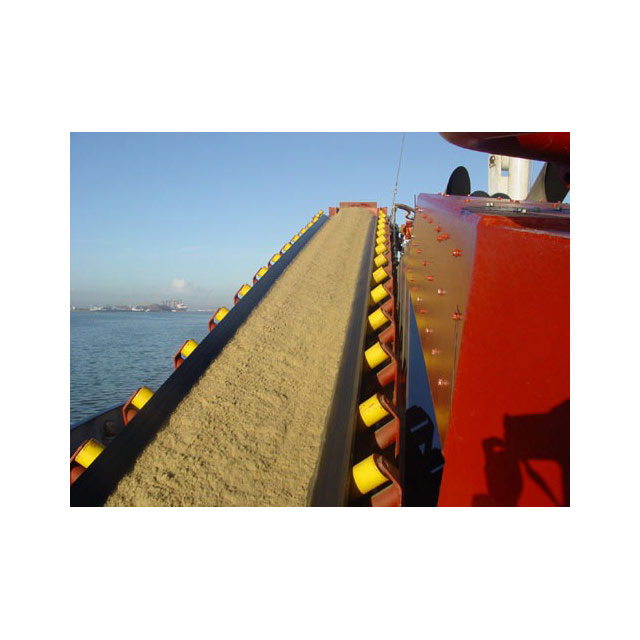
Industry standard classifications eliminate dangerous guesswork completely. They define clear thermal resistance tiers globally. We use these tiers to match specifications directly to operational reality. Standardized grades prevent catastrophic system failures from occurring. They create a universal language for engineers and operators.
We categorize these standard grades into four distinct performance levels. You must understand them to ensure safe material handling.
Classification Grade | Continuous Surface Temperature Limit | Peak Temperature Limit | Typical Operational Application |
|---|---|---|---|
T1 Grade | Up to 100°C | 120°C | Warm powders, dried sand, light ash |
T2 Grade | Up to 125°C | 150°C | Hot cement, fertilizer processing |
T3 Grade | Up to 150°C | 180°C | Roasted ores, heavy coking operations |
T4 Grade (Ultra-High) | Above 175°C | 200°C+ | Red-hot slag, molten clinker, foundry sand |
You must align these grades carefully against facility data. Evaluate your specific facility requirements thoroughly before finalizing decisions. Overpaying for unnecessary thermal capacity drains maintenance budgets fast. Specifying T4 for a T2 application wastes valuable capital. Conversely, specifying T2 for a T4 application destroys equipment rapidly. Thermal breakdown causes the rubber to harden and glaze. This glazing ruins material traction immediately. Accurate alignment ensures optimal performance, strict safety, and prolonged equipment life.
Rubber cover compounds dictate ultimate thermal survival. Chemistry plays the most vital role here. We rely primarily on specialized SBR and EPDM formulations. Choosing the wrong polymer ensures rapid physical degradation.
Styrene-Butadiene Rubber (SBR) works best for moderate heat exposures. We specify it routinely for T1 and T2 environments. SBR offers highly balanced physical durability. It resists mechanical abrasion reasonably well under standard operating conditions. It maintains structural flexibility when exposed to continuous moderate temperatures.
Ethylene Propylene Diene Monomer (EPDM) dominates severe heat applications completely. We demand it explicitly for T3 and T4 environments. EPDM delivers vastly superior resistance to thermal aging. It prevents dangerous ozone cracking entirely. You must specify EPDM for extreme continuous heat loads. A well-formulated heat resistant rubber belt protects your underlying internal structure perfectly.
Carcass selection guarantees core structural integrity. We must support heavy physical loads alongside extreme temperatures.
EP Fabric combines woven polyester and nylon threads. We use it as the accepted standard for most systems. It handles normal industrial tension perfectly well. However, you must note critical thermal shrinkage limits. Extreme heat causes synthetic fabrics to contract unpredictably. This contraction disrupts tracking mechanisms severely.
Steel cord reinforcement handles extreme mechanical stress flawlessly. We require it explicitly for high-tension lines. Long-distance conveying demands this rigid internal support. Severe heat combined with heavy physical loads warps standard fabric. Steel cords maintain dimensional stability perfectly under extreme duress.
Material Performance Comparison Chart | |||
Material Type | Primary Strength | Primary Weakness | Best Used For |
|---|---|---|---|
SBR (Cover) | Good abrasion resistance, cost-effective | Hardens rapidly above 125°C | Moderate heat (T1/T2) |
EPDM (Cover) | Exceptional thermal stability, no cracking | Lower tear resistance than SBR | Severe heat (T3/T4) |
EP Fabric (Carcass) | Flexible, high impact absorption | Thermal shrinkage under extreme load | Standard length systems |
Steel Cord (Carcass) | Zero thermal shrinkage, massive strength | Heavy, complex to splice | Long distance, high tension |
Every industry introduces unique operational hazards daily. We cannot use a simple one-size-fits-all approach here. You must tailor your exact selection strategy accordingly. Ignoring specific environmental threats guarantees premature equipment failure.
Cement plants transport extremely hot clinker continuously. This application presents severe operational challenges for maintenance teams. A proper cement plant conveyor belt requires careful, exact specification. Evaluation criteria must weigh extreme heat spikes heavily. You must also account for intense chemical factors. Clinker dust creates massive abrasion issues across the system. We need highly robust top covers to survive this prolonged physical assault.
Stone crushing operations face severe dual threats. They handle sharp, jagged impact loads constantly throughout shifts. Mechanical processing creates intense latent friction heat. A reliable stone crusher conveyor belt demands unique engineering adjustments. We require significantly thicker top covers here. The rubber must absorb heavy physical impacts seamlessly. It must simultaneously resist long-term thermal breakdown. Thin covers allow jagged rocks to penetrate the heated rubber easily.
Steel mills and foundries operate in highly extreme environments. They handle sintered ore and volatile molten slag. We focus heavily on absolute burn-through resistance here. Hot materials sit directly on the rubber surface. Some localized applications demand embedded fiberglass reinforcement. This prevents red-hot materials from piercing the carcass and igniting fires.
Use these specific evaluation criteria when auditing hazards:
Measure the exact drop height of incoming hot materials.
Analyze the sharp geometric profile of the conveyed load.
Determine the required rubber thickness for optimal impact absorption.
Assess the specific need for specialized transverse breaker plies.
Monitor the localized ambient temperature near furnaces or kilns.
Marketing promises mean absolutely nothing without hard data. We must actively avoid unverifiable supplier claims. Bad technical data leads to rapid equipment failure. You must demand hard laboratory evidence before approving purchases.
ISO 4195 compliance remains entirely non-negotiable. It acts as the trusted global testing standard globally. It measures the exact thermal resistance of rubber covers. You should reject products lacking this specific certification immediately. A genuine heat resistant conveyor belt easily passes these rigorous tests. Test protocols bake the rubber samples for days. They evaluate how severely the chemical structure degrades.
Accelerated aging tests reveal true long-term performance. Heat degrades rubber chemistry steadily over time. Demand specific laboratory test data from every supplier. Ask for the precise percentage of tensile strength loss. Request the exact elongation loss metrics from the lab. This critical data must reflect prolonged exposure limits. It proves exactly how the rubber behaves under maximum rated heat. If tensile strength drops by 50% quickly, the formula is defective.
Abrasion testing holds equal operational importance. We look primarily at DIN 53516 or ISO 4649 standards. Thermal resistance often sacrifices standard physical wear resistance. Pure EPDM handles heat perfectly but wears out faster physically. Buyers must check these abrasion loss metrics carefully. High abrasion loss destroys operational efficiency rapidly. You must balance thermal survival and physical wear scientifically.
Implementation risks often destroy perfectly specified materials. Splicing failures present the greatest operational danger overall. The splicing trap catches many unwary buyers. They spend heavily on materials but ignore the joints.
A specialized thermal rating means nothing with standard adhesives. You must never use generic bonding agents here. Splicing compounds must match the EPDM or SBR rating perfectly. If they fail, the joint breaks apart violently under tension. Thermal stress liquefies standard glue incredibly quickly. Hot vulcanization stands as the only acceptable joining method. Cold splicing degrades rapidly when subjected to intense thermal cycling.
Installation requires careful thermal calculations beforehand. Heat naturally causes significant physical material expansion. Tensioning systems must account for this sudden elongation. Take-ups need extra travel distance engineered in specifically. We see this mostly during the initial system run-in period. The carcass settles and stretches significantly under thermal load. If tensioners bottom out, the system loses traction completely.
Your sourcing checklist determines ultimate project success. Never buy any industrial conveyor belt without strict, rigorous vetting. Evaluate manufacturers heavily based on technical transparency.
Use this strict supplier evaluation checklist:
Do they provide comprehensive physical specification sheets?
Do these sheets list exact cover grades and polymer types?
Do they supply verified third-party laboratory test certificates?
Do they offer warranties covering premature thermal degradation?
Does the warranty specifically cover sudden hardening and surface cracking?
Selecting correct materials demands strict, evidence-based operational analysis. We must evaluate surface temperature realities accurately and scientifically. You must deeply understand compound chemistry and internal structural integrity. Always demand rigorous laboratory testing data from every supplier. Avoiding assumptions protects your facility from catastrophic sudden failures.
Take immediate action on these practical next steps. First, audit your current system failure modes carefully. Document whether you see transverse cracking, glazing, or physical wear. Second, measure actual surface temperatures during peak production operation. Do not guess or estimate these vital metrics. Finally, request technical specification sheets immediately. Demand ISO test reports from shortlisted manufacturers to verify claims. Evidence-based decisions guarantee long-term operational success and optimal safety.
A: The earliest indicators involve rapid loss of physical elasticity. You will notice significant surface glazing where the rubber turns hard and shiny. Transverse cracking often develops across the top cover. Eventually, the brittle cover starts separating entirely from the underlying fabric carcass.
A: No. Even short spikes beyond design limits permanently alter rubber chemistry. This intense exposure leads to rapid vulcanization reversal. The rubber quickly loses its molecular bonds, resulting in extreme brittleness and immediate operational failure.
A: This happens due to unavoidable chemical trade-offs. Rubber compounds formulated specifically for maximum heat resistance naturally exhibit slightly lower abrasion resistance. Pure EPDM handles heat flawlessly but wears faster physically than standard anti-abrasion belts. Utilizing thicker top covers remains the standard industry solution.
A: Hot vulcanized splicing is absolutely mandatory for high-temperature applications. Cold adhesives degrade rapidly under intense thermal stress. Hot vulcanization fuses the joint using heat and pressure, matching the exact thermal limits of the base belt.