 |


| Quantity: | |
|---|---|
3VX,5VX,8VX,XPZ,XPA,XPB,XPC
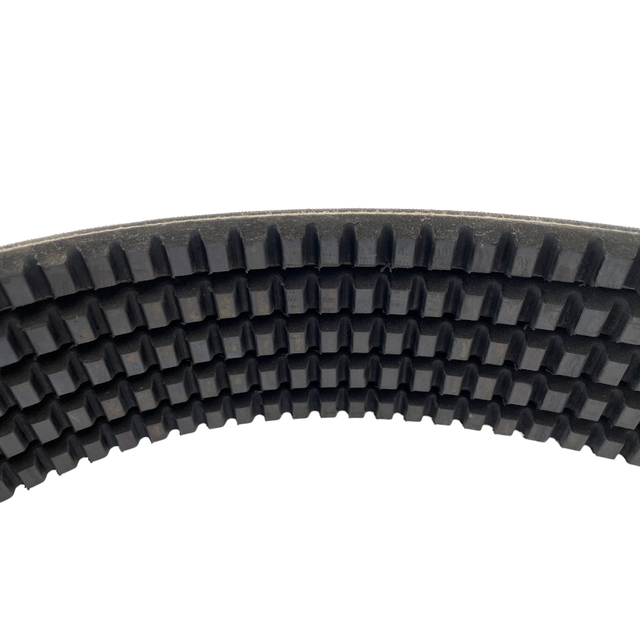
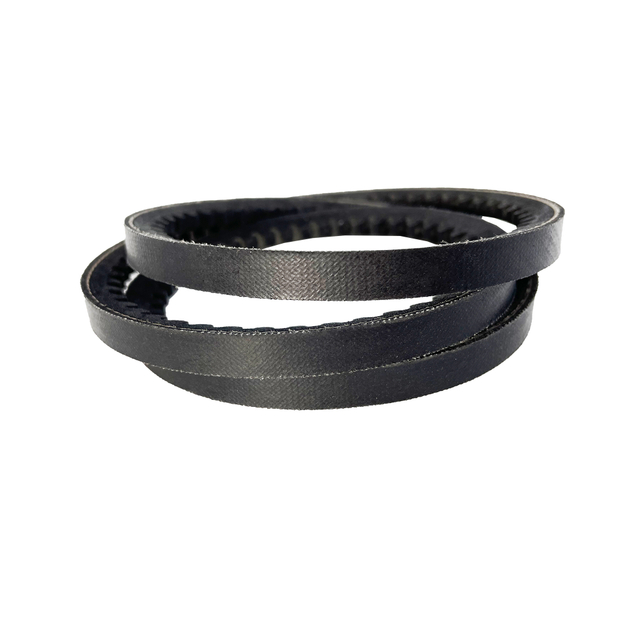
Cogged agricultural rubber banded V belts are designed for power transmission systems on agricultural machinery, where equipment operates under variable load and outdoor environmental conditions. These belts feature notches on the inner surface and a banded structure that joins multiple single belts into a single unit. This design addresses common challenges in agricultural drive systems, such as small pulley diameters, fluctuating loads, and belt turnover on multi-groove drives.
The belts follow the dimensional specifications defined in ISO 4184 for narrow V belts, ensuring interchangeability with pulleys designed to the same standard. They are suitable for both replacement use on existing equipment and original equipment installation for new agricultural machinery builds. Commercial procurement orders can be fulfilled with standard stock sizes or custom length configurations for bulk requirements.

The product range covers two primary categories of cogged narrow V belts, with series designations matching global industrial naming conventions.
Belt Series | Profile Type |
|---|---|
3VX | Narrow cogged |
5VX | Narrow cogged |
8VX | Narrow cogged |
XPZ | Narrow cogged classical equivalent |
XPA | Narrow cogged classical equivalent |
XPB | Narrow cogged classical equivalent |
XPC | Narrow cogged classical equivalent |
Banded configurations are available for all listed series, with the number of ribs per band selected according to the drive power requirement. Standard length options are produced for each series, and additional lengths can be arranged for volume orders. The 8VX1180 specification is one commonly stocked size for high-power agricultural drive systems.
Quantity:1
The inner surface of each belt includes evenly spaced cogs that reduce bending stress when the belt wraps around small diameter pulleys. This reduced stress allows the belt to operate on smaller pulley diameters than equivalent smooth V belts, without accelerating material fatigue. The cogged profile also increases surface contact conformity with pulley grooves, which supports more consistent power transfer under fluctuating torque loads common in agricultural equipment.
The banded structure connects multiple individual belts along the back with a continuous rubber layer. This prevents individual belts from turning over or separating on multi-groove drives, which is a frequent issue on high-vibration agricultural machinery such as harvesters and tractors. The unified structure also distributes load evenly across all ribs, reducing uneven wear and extending the usable life of the belt set.
These belts operate within a temperature range of -45 °C to +70 °C. This range covers most outdoor operating conditions encountered in agricultural work across different climate zones. The rubber compound retains sufficient flexibility at low temperatures to avoid cracking during cold startup, and resists softening at the upper end of the temperature range to maintain dimensional stability under continuous load.
The belt material also resists degradation from exposure to sunlight, moisture, and common agricultural fluids such as diesel and lubricating oil splashes. This resistance reduces performance degradation from outdoor storage and field operation, supporting longer service intervals for farm equipment.
Cogged banded V belts are used across a wide range of agricultural equipment. Primary applications include main drive systems on combine harvesters, where high power transfer and vibration resistance are required. They also serve in engine accessory drives on tractors, powering alternators, water pumps, and cooling fans.
Other common uses include drive systems for hay balers, irrigation pumps, and grain handling equipment on farms. The belts are also installed on stationary processing machinery such as feed mills and crop drying systems. For all these applications, the cogged and banded design reduces maintenance frequency compared to standard single V belts, which supports uninterrupted operation during critical planting and harvest periods.
During installation, ensure the pulley grooves are clean and free of debris before fitting the banded belt. Align pulleys correctly to avoid side loading and uneven edge wear, as misalignment is a leading cause of premature belt failure on agricultural equipment. Tension should be set according to the equipment manufacturer's specifications, with re-tensioning performed after the initial run-in period.
For maintenance, inspect belts periodically for signs of edge fraying, cog cracking, or uneven wear across the banded ribs. Check pulley groove wear at the same time, as worn pulleys will accelerate belt degradation. When replacement is required, always replace the complete banded belt unit rather than individual ribs, to maintain even load distribution. Store spare belts in a cool, dry location away from direct sunlight and chemical vapors to preserve material properties.
These cogged narrow V belts are manufactured in accordance with ISO 4184, which defines dimensional specifications for narrow V belts and corresponding pulleys. This standardization ensures compatibility with pulleys and drive systems designed to the same global specification.
The belts are designed for continuous operation within a temperature range of -45 °C to +70 °C. Short-term exposure to temperatures slightly outside this range may be acceptable depending on load conditions, but extended operation beyond the rated range will accelerate material degradation.
Banded V belts can replace sets of single V belts on equipment with matched multi-groove pulleys. The banded design provides improved stability and load distribution, but the total cross-section and length must match the original drive specification to ensure proper fit and power transfer capacity.