 |






| Quantity: | |
|---|---|
EP100 EP125 EP200 EP250 EP300 EP350 EP400 EP500 EP600
100 meters
The EP polyester industrial conveyor belt is constructed with multiple plies of polyester fabric embedded in rubber compound. The "EP" designation refers to the polyester (polyethylene terephthalate) warp yarns combined with polyamide weft yarns, which provides the belt with high tensile strength in the longitudinal direction and good transverse flexibility. Each fabric ply is separated by a rubber skim layer that bonds the plies together and absorbs mechanical shock during operation.
The belt features a top (carrying) cover and a bottom (pulley) cover made from rubber compound. The top cover thickness is selected based on the material being conveyed and the abrasion conditions of the application. The bottom cover provides wear resistance against pulley contact and supports traction between the belt and drive pulleys. Cover rubber compounds can be specified for general purpose, heat resistance, oil resistance, or flame retardant properties depending on industrial application requirements.

The conveyor belt is available in nine standard strength grades, ranging from EP100 to EP600, to match the load requirements of different material handling systems.
Grade | Full Thickness Tensile Strength (N/mm) | Number of Plies |
|---|---|---|
EP100 | 100 | 2-4 |
EP125 | 125 | 2-4 |
EP200 | 200 | 3-5 |
EP250 | 250 | 3-5 |
EP300 | 300 | 3-6 |
EP350 | 350 | 4-6 |
EP400 | 400 | 4-6 |
EP500 | 500 | 5-8 |
EP600 | 600 | 5-8 |
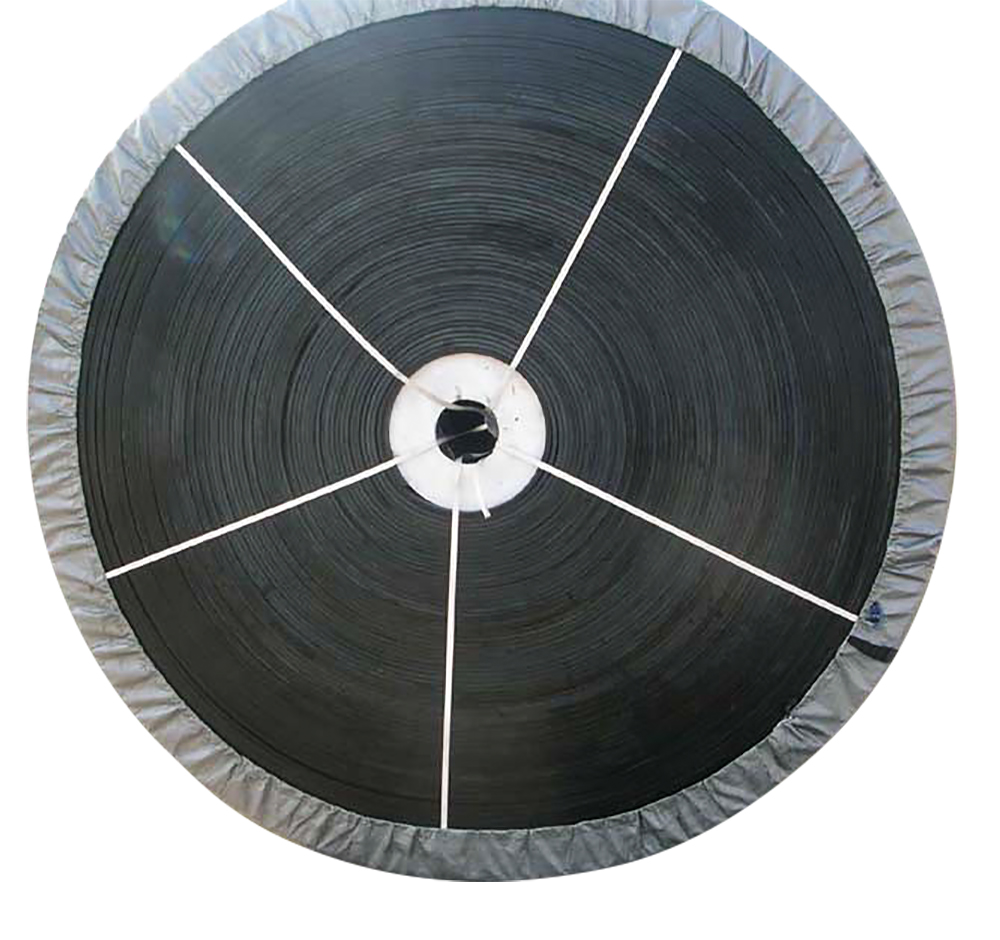
Belt rolls are marked with specification details for identification. The example marking "EP100 10 MPA 800×3(5+2)×250m" indicates:
Grade: EP100
Cover rubber hardness: 10 MPA (tensile strength of cover rubber)
Belt width: 800 mm
Number of plies: 3
Top cover thickness: 5 mm
Bottom cover thickness: 2 mm
Roll length: 250 meters
The minimum order quantity for EP polyester conveyor belts is 100 meters. Custom widths, lengths, and cover thicknesses can be specified for commercial procurement orders to match specific conveyor system dimensions.
EP conveyor belts are designed for material handling in heavy-duty, high-speed, and medium-distance transport applications. The belts are used across multiple industries for conveying bulk materials, packaged goods, and unit loads.
Mining operations: Conveying coal, ore, and aggregate materials in underground and surface mining facilities
Port and harbour logistics: Bulk cargo handling at shipping terminals, including grain, minerals, and construction materials
Metallurgical facilities: Material transport within steel plants, foundries, and metal processing operations
Construction sites: Aggregate and sand conveying at concrete batching plants and construction material yards
Chemical processing: Transport of granular and powdered chemical products within production facilities
Grain and food processing: Bulk grain handling at silos, mills, and food processing plants
The polyester fabric carcass provides low elongation under load, which reduces the need for frequent belt take-up adjustments. The EP construction offers good troughability, allowing the belt to form the trough shape required for containing bulk materials on inclined or horizontal conveyor runs. The rubber covers provide abrasion resistance against the conveyed material and pulley contact surfaces.
The required EP grade depends on the conveyor length, material load per meter, belt speed, and incline angle. Calculations based on DIN 22101 or CEMA standards determine the required tensile strength, which is then matched to the nearest standard EP grade. Factors such as material density, lump size, and ambient conditions also influence the selection.
EP belts use polyester warp yarns and polyamide weft yarns, resulting in lower elongation (approximately 1.5-2 percent at rated load) and better dimensional stability. NN (nylon) belts use polyamide yarns in both warp and weft directions, offering higher elongation (approximately 2.5-3 percent) and greater impact resistance but requiring more take-up adjustment. EP belts are generally preferred for longer conveyor systems where stretch control is important.
Standard EP belts with general-purpose rubber covers can handle materials up to approximately 80°C. For higher temperature materials such as hot clinker, asphalt, or sintered ore, heat-resistant cover rubber compounds (specified as T1, T2, or T3 grades) are available. The appropriate cover grade depends on the material temperature and contact duration.
Top cover thickness typically ranges from 2 mm to 8 mm, with 3 mm, 4 mm, and 5 mm being common selections. Thicker covers are specified for abrasive materials, larger lump sizes, or higher impact loading. Bottom cover thickness usually ranges from 1.5 mm to 3 mm. The specific selection depends on the material characteristics, drop height, and pulley diameter.